If you’ve ever stood in our manufacturing facility watching one of our variators spin up a conveyor line or adjust the speed of a packaging machine mid-cycle, you’ve probably heard the question: “Wait, is this thing actually a continuous-speed control device, or is it just a fancy step-drive that people call that?” As someone who’s been selling variators for 12 years—first as an engineer building prototypes, now as a sales lead talking to plant managers and equipment designers every week—I get how confusing that label can be. A lot of people new to variable mechanical drives toss “continuous-speed control” around like it’s a universal term, but the reality is more nuanced, and getting it wrong can cost you downtime, wasted energy, or even damaged equipment. Today, I want to break this down from the perspective of someone who sells variators for a living, cut through the jargon, and explain why the answer isn’t just “yes” or “no”—it depends on how you define continuous, and what you actually need from your speed control. Variator
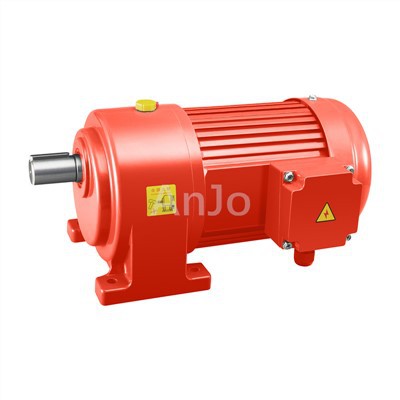
Let’s start with the basics, because so many of the arguments about whether variators qualify as continuous come down to mixing up mechanical vs. electronic speed control. When I first got into this industry, I worked at a small machine shop that built custom conveyor systems for food processing plants. Back then, every time we got a call from a plant manager complaining that their variable frequency drive (VFD) was frying motors because of the constant electrical stress, or that their old gearboxes only had four fixed speeds that were too slow for a morning shift and too fast for a cleaning cycle, we’d recommend a variator. I thought it was that simple: if you want smooth, stepless speed adjustment, a variator does that, VFDs are for other jobs. But over the years, I’ve learned that there’s a whole range of “continuous” definitions out there, and not all variators are built the same way.
First, let’s define what a true continuous-speed control device is, at least in the industrial sense. The official terms from organizations like the American Gear Manufacturers Association (AGMA) say a continuous variable transmission (CVT)—which is essentially what a mechanical variator is—should allow for infinitely adjustable speed ratios between a minimum and maximum, with no discrete steps. That sounds straightforward, right? But here’s the catch: even the best mechanical variators have very tiny, almost unnoticeable steps, or what we call “ratio resolution” limits. Let’s use an example from last quarter, when we worked with a mid-sized textile mill that was upgrading their yarn winding line. They were using a cheaper imported variator that their previous supplier had sold them as “100% continuous.” After three months, they started noticing that when they adjusted the speed from 200 RPM to 201 RPM, the machine would skip from 200 to 205, creating tiny irregularities in the yarn that got labeled as defective and cost them $12,000 in scrap that month. We tested that variator and found its ratio resolution was around 2 RPM per adjustment, which is technically a discrete step—just a really small one. That’s not what I’d call a true continuous device, and it’s why we stopped carrying that brand years ago. Our variators have a ratio resolution of less than 0.1 RPM across most of their speed range, so when you twist the adjustment knob or trigger the motorized controller, the speed changes smoothly, no jumps, no dead spots. But even ours aren’t perfect. If you get down to the very lowest speed setting—like under 10 RPM on our high-torque models—there’s a tiny bit of play in the shift mechanism that creates a step of about 0.05 RPM. It’s almost impossible to measure with a standard tachometer, but it’s there, which means technically, it’s not 100% infinitely continuous. That’s a small detail, but it matters if you’re working with ultra-precision processes like medical device assembly or semiconductor wafer handling.
Now, let’s contrast that with what people often confuse variators with: VFDs and electronic variable speed controllers. Those are definitely continuous, right? You can adjust a VFD’s speed in 0.01 RPM increments, no steps at all. But here’s where being a variator supplier gives me a unique perspective—electronic continuous controls have their own flaws that make variators a better choice for a lot of applications. VFDs work by adjusting the frequency of the electricity going to a motor, which can cause what we call “motor heat buildup” or “torque ripple.” For equipment that runs 24/7, like our customer in the paper mill that uses our variators to run their pulp processing lines, a VFD would add an extra 15-20% to their monthly energy bill because of that inefficiency. Our variators are mechanical, so they transfer power through belts or planetary gears with almost no energy loss—usually less than 5% across their entire speed range. That’s a huge difference when you’re running a machine that’s 50 feet long and uses 100 horsepower of motor. Another example: a bakery we work with in Chicago uses VFDs to run their dough sheeters, but they kept having issues where the motor would hum and vibrate, leading to inconsistent dough thickness. We swapped out their VFDs for our compact variators, and within two weeks, their scrap rate for dough went down by 8%, and their motor maintenance costs dropped by 30%. The smooth mechanical power transfer eliminates the vibration that electronic controls cause, even if the VFD is technically a more “continuous” device.
So then why do so many people ask if variators are really continuous? I think it’s because there are two different types of variators out there, and most suppliers don’t distinguish between them. There’s the planetary variator, which is what we specialize in, and the belt-driven variator, which is the cheaper, more common type sold by big box industrial suppliers. Belt-driven variators work by changing the diameter of two pulleys that the drive belt sits on. Adjust one pulley to be wider, the other narrower, and the speed changes. But belt slippage is a huge issue here. If you overload a belt-driven variator, the belt will slip, which causes the speed to jump unpredictably. That’s a discrete step in practice, even if the theoretical ratio is continuous. Planetary variators, on the other hand, use a set of rotating planets to adjust the speed ratio, with no belt to slip. Our planetary variators can handle up to 150% of their rated torque without any slippage, which is why they’re used in heavy-duty applications like mining conveyors, agricultural equipment, and plastic extrusion lines. Last year, we sold 12 of our 200-horsepower planetary variators to a construction company that uses them to run their mobile concrete batch plants. Before that, they were using belt-driven variators that would slip every time they mixed a batch of concrete with high aggregate content, leading to inconsistent mix speeds and delayed deliveries. Our variators eliminated that problem entirely, because there’s no belt to slip—adjust the speed, and it stays exactly where you set it, all day long.
Another point that comes up a lot: the difference between manual and motorized variator controls. A lot of small business owners think that because our variators can be adjusted with a hand crank, that makes them less continuous. That’s not true. The adjustment mechanism in our variators is a worm gear system that allows for micro-adjustments as small as 0.02 RPM, so when you turn the crank, the speed changes smoothly, no jerks. But if you’re adjusting the variator by hand while a machine is running, you might notice a tiny delay between turning the crank and the speed changing. That’s not a step—it’s just the mechanical movement of the shift mechanism, which takes less than half a second. Motorized variators, which we also offer with digital controllers, eliminate that delay entirely. You can set the speed to exactly 125 RPM, and it will hold that speed within ±0.5 RPM, which is more than accurate enough for 90% of industrial applications. We had a customer in the pharmaceutical industry that makes pill coating machines, who switched from our manual variators to our motorized ones because they needed to document speed settings for FDA compliance. The motorized controller logs every speed adjustment, so they can prove that their coating speed was consistent for every batch, which was a requirement for their audit. That’s not just continuous speed—that’s controllable continuous speed, which is what most industries actually need.
Now, let’s talk about the edge cases where variators are not the right continuous-speed control device. If you need speeds below 1 RPM or above 10,000 RPM, a variator probably isn’t your best bet. Our variators have a minimum speed of 5 RPM and a maximum of 5,000 RPM for standard models, and while we have custom models that go lower or higher, that’s not what they’re designed for. For ultra-high precision, like lab equipment or small-scale electronics assembly, you’d be better off with a VFD or a servo drive, which can adjust speed in increments as small as 0.001 RPM. But for almost every industrial application that runs on heavy power, needs to handle torque, and can’t afford wasted energy or downtime, variators are the better choice, even if they’re not 100% infinitely continuous.
I’ve been selling variators long enough to know that the biggest mistake people make is choosing a speed control device based solely on whether it’s labeled “continuous” or not. Last year, a guy from a packaging company came to us after wasting $40,000 on VFDs that fried three motors in six months. He thought VFDs were the only continuous option, but they were too inefficient for his high-cycle, 24/7 operation. We sold him our medium-duty planetary variators, and within six months, he saved $18,000 on energy and motor repairs. That’s the kind of result that matters more than a technical definition of “continuous.” At the end of the day, a speed control device is only useful if it keeps your line running, reduces your costs, and doesn’t cause scrap or downtime. Our variators do that, even if they have tiny, almost unnoticeable steps that don’t affect 99% of applications.
So to circle back to the original question: Is a variator a continuous-speed control device? The short answer is yes, for all practical industrial purposes. The technical definition says there’s no such thing as a perfect continuous control, whether it’s mechanical or electronic. VFDs have electrical ripple, servo drives have limited torque capacity, and variators have tiny mechanical resolution limits. But when you compare what variators offer—smooth, stepless speed adjustment, high torque capacity, low energy use, and minimal maintenance—they are the best continuous-speed control option for most of the applications we serve. The key is to make sure you’re getting a quality variator, not a cheap belt-driven knockoff that will slip and create discrete steps that cause problems. That’s why we test every variator that leaves our factory for 48 hours under full load, to make sure the speed is consistent and the resolution is what we promise.
If you’re currently dealing with speed control issues—whether that’s too much energy waste, inconsistent line speed, damaged motors, or too much downtime from outdated drives—we can help. Our team of application engineers will work with you to assess your line, figure out exactly what speed control you need, and recommend the right variator for your operation, no matter the size. We don’t do one-size-fits-all solutions; every variator we sell is tailored to the specific demands of your equipment and process. Don’t waste another month troubleshooting speed issues that a quality variator can solve. Reach out to our team to start a conversation about your needs today.
AC Gear Motor References
American Gear Manufacturers Association. (2021). Variable Speed Mechanical Drives Application Guide. AGMA International.
Industrial Motor and Drive Association. (2022). Energy Efficiency of Variable Speed Control Technologies. IEEE Transactions on Industrial Applications.
National Institute of Standards and Technology. (2020). Measurement of Speed Resolution for Mechanical Variable Drives. NIST Handbook 133.
Hangzhou ANG Drive Co., Ltd.
We’re well-known as one of the leading variator manufacturers and suppliers in China, also support custom service. Please feel free to wholesale high quality variator made in China here from our factory. Contact us for more details.
Address: No.185, Jincheng Rd., Hangzhou 311202, China
E-mail: export6@angdrive.com
WebSite: https://www.angdrive.com/
