As a supplier of desiccant air dryers, I get this question all the time from plant managers, maintenance technicians, and even HVAC engineers who are new to desiccant drying systems: Why does regeneration air volume matter so much when it comes to drying performance? It’s easy to get lost in the jargon—“desiccant bed saturation,” “dew point depression,” “regeneration efficiency”—but the core of this question is straightforward: if you cram too much or too little regeneration air through your desiccant wheel, your drying process won’t just underperform—it can actually cause long-term damage to your dryer. Let’s break this down, based on what we see every day in our work with industrial drying applications, no textbook fluff here. Desiccant Air Dryer

First, let’s ground this in how a desiccant air dryer works, because you can’t talk about regeneration air without understanding the cycle. Desiccant dryers don’t cool air to remove moisture (like refrigerated dryers do)—they use a hygroscopic material (usually silica gel, molecular sieve, or alumina) that pulls water vapor out of process air as it flows through a rotating desiccant wheel. The wheel has two sections: one where the “drying zone” does the work of stripping moisture from your process air, and a smaller “regeneration zone” where dry, heated air is blown through the wheel to boil off the trapped water, resetting the desiccant so it can dry air again. That regeneration air is the heart of the cycle, and its volume is the main variable that determines how well that reset happens.
Here’s the first mistake we see customers make: using too little regeneration air. It’s counterintuitive—you’d think blowing less hot air would save energy, right? But when regeneration air volume is too low, the heated air can’t come into contact with every part of the desiccant bed. Think of it like trying to clean a dirty dish with a tiny squirt of water: you might get a spot, but the food residue is still caked on the rest. With low regeneration air volume, the desiccant only partially regenerates, so it’s not as effective at pulling moisture the next time around. We had a customer in the food packaging industry last year who was running their 1500 CFM desiccant dryer with 20% regeneration air (the minimum their unit was set to) thinking they were cutting costs. But their process air dew point was hovering at -20°F instead of the -40°F they needed, leading to condensation in their plastic packaging lines and rejected product. When we adjusted the regeneration air volume to 25%—the sweet spot for their load—their dew point dropped, rejections fell by 12%, and they didn’t even see a significant jump in energy use. That’s the thing: too little regeneration air doesn’t save energy, it wastes it by making your dryer work harder to compensate for poor desiccant performance.
Then there’s the opposite problem: too much regeneration air. This is a mistake we see from customers who think more hot air = more moisture removed, but that’s not true either. If you blow way more regeneration air than the desiccant bed can handle, two bad things happen. First, you’re wasting energy heating and moving air that doesn’t need to be there—regeneration air is heated to 300-350°F usually, and every extra CFM you push through means higher fuel or electricity costs. Second, excessive regeneration air can actually overheat the desiccant, especially for materials like silica gel. Silica gel starts to break down at temperatures above 400°F, and if you’re blowing a huge volume of hot air, even if the temperature is in the safe range, the sheer volume can cause the desiccant particles to rub against each other more, leading to dusting. That dust gets carried into your process air lines, contaminating products like pharmaceutical powders or electronic components. Another customer, a manufacturer of industrial electronics, tested a 35% regeneration air volume a couple years ago to speed up their cycle. Their energy bill went up 18% in a month, and when they inspected their desiccant wheel, they found 15% of the silica gel had turned to fine dust, leading to component failures in their test runs. That’s a costly mistake—more isn’t better here.
Now, let’s get into the science that backs these observations, because this isn’t just anecdotal. The key metric here is regeneration air specific volume, or the amount of air (in CFM) used per CFM of process air, usually expressed as a percentage. For most rotary desiccant dryers used in industrial applications, the optimal regeneration air volume falls between 20% and 30% of the process air flow rate. But why? Let’s break that down thermodynamically. To regenerate desiccant, you need to supply enough sensible heat (heat that changes temperature, not state) to raise the desiccant and the trapped water to the temperature needed to vaporize the water. The latent heat (heat that changes water from liquid to vapor) needed to remove a pound of water is about 1050 BTU. If your regeneration air volume is too low, the total sensible heat isn’t enough to reach that latent heat requirement across the entire desiccant bed—so water stays trapped. If your regeneration air volume is too high, you’re over-saturating the regeneration air with water vapor before it even leaves the desiccant, which means you’re blowing more air than the wheel can adsorb moisture from, leading to wasted heat and unnecessary wear on the desiccant.
Another factor that ties into this is ambient conditions. A lot of customers don’t account for seasonal changes when setting their regeneration air volume. In the winter, when ambient air is cold and dry, you might need a slightly lower regeneration air volume because the inlet air for your regeneration cycle is already dry, so it can absorb more moisture. In the summer, when ambient air is humid, you need to bump the regeneration air volume up a little, because the incoming regeneration air has more moisture, so you need more volume to carry that extra moisture out of the desiccant bed. We had a customer in Florida, where humidity is 10-15% higher in summer than in winter, keep their regeneration volume set to 22% year-round. In July, their dew point dropped to -18°F instead of their target -40°F, because the humid summer air needed more regeneration air to fully reset the desiccant. When they adjusted it to 26% in June through August, their dew point stayed consistent, and they didn’t have to adjust it again once fall came. That’s why a “set it and forget it” approach doesn’t work—regeneration air volume isn’t a static number; it shifts with your operating environment and your process load.
We also see a lot of confusion between fixed-volume and variable-volume regeneration systems. Old desiccant dryers often had fixed regeneration air volume, which meant they were either wasting energy in low-humidity seasons or underperforming in high-humidity seasons. Modern desiccant dryers, like the ones we design, have variable frequency drives (VFDs) on the regeneration air blower, which lets you adjust the volume in real time based on the dew point of the process air. For our customers, that’s a game-changer: one pharmaceutical client we work with reduced their regeneration air energy use by 21% in a year by adjusting the volume automatically, while maintaining a consistent dew point for their sterile air supply. If you have a fixed-volume system, you can still make adjustments—run a quick test: lower the volume by 2% and check your dew point for three days, if it stays on target, you can drop it a little more; if it drops, bump it back up. If you can, invest in a dryer with variable volume—it’s not a big extra cost, and the savings add up fast.
Let’s circle back to the drying process itself, because the goal is always consistent, reliable drying for your product. If regeneration air volume is too low, you’ll see two common issues first: inconsistent dew point across your process lines, and higher energy use from your dryer working to compensate. The inconsistent dew point means some areas of your production get drier air than others, leading to product defects—think of bread that bakes unevenly because some loaves are in a drier environment, or plastic parts that warp because one side has more moisture. When regeneration air volume is too high, you’ll see higher energy bills, desiccant dust contamination, and even a shorter wheel lifespan. Silica gel and molecular sieve desiccants last 5-10 years on average, but we’ve seen customers who push too much regeneration air need to replace their wheels every 2-3 years, which costs thousands of dollars in downtime and parts.
Here’s a rule of thumb we share with every customer: start with 25% regeneration air volume, then test it against your target dew point. If your dew point is lower than needed, you can go down to 20% (but don’t go lower than that, or you risk partial regeneration). If it’s higher than needed, go up to 30% (don’t go higher, unless you have a custom application like drying highly moisture-sensitive materials, in which case you can work with us to adjust based on your load). And don’t forget to adjust for seasons—2% higher in summer, 2% lower in winter, and you’ll see a huge difference in performance.
I can’t stress enough how often this one variable trips up even experienced operators. We’ve walked into plants where their dryer had been running the same regeneration volume for 10 years, and they were losing thousands of dollars a month in energy and product rejections because of it. It’s not a complicated fix—just a small adjustment that makes a big impact on your drying process.
At the end of the day, desiccant drying is all about balance: balance between heating and air flow, between drying and regeneration, between energy use and performance. Regeneration air volume is the easiest lever to pull to get that balance right. If you’re noticing inconsistent dew points, higher energy bills than you expected, or more product defects related to moisture, chances are your regeneration air volume is off.
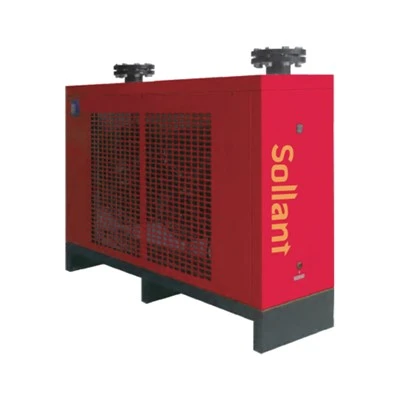
If you’re not sure where to start, or you’re looking to upgrade your desiccant air dryer to get better control over regeneration air volume, reach out to us. We’ll walk you through testing your current system, adjusting the volume, or even recommending a system tailored to your specific drying needs. Don’t let a small, simple variable derail your drying process—let’s get it right.
Filter and Separator Series References
- ASTM International. (2019). Standard Practice for Desiccant Drying of Gases. ASTM D6836-19.
- Van Der Kooji, J. P. (2020). “Regeneration Efficiency of Rotary Desiccant Wheels: The Role of Air Flow Rate and Temperature.” International Journal of HVAC&R Research, 26(4), 412-425.
- Industrial Ventilation: A Manual of Recommended Practice for Design. (2021). American Conference of Governmental Industrial Hygienists (ACGIH), Chapter 12.
- Silva, M., et al. (2018). “Energy Performance of Variable-Volume Regeneration in Desiccant Air Dryers for Industrial Applications.” Journal of Manufacturing Systems, 48, 112-119.
Shanghai Sollant Energy Saving Technology Co., Ltd.
As one of the most professional desiccant air dryer manufacturers and suppliers in China, we’re featured by quality products and good service. We warmly welcome you to buy bulk advanced desiccant air dryer from our factory. If you have any enquiry about cooperation, please feel free to email us.
Address: No.215, Songri Center, Beihongqiao, Jiading District, Shanghai, China
E-mail: info4@sollant.com
WebSite: https://www.sollanttreatment.com/
