Hey everyone, it’s Jake here from your go-to mechanical water meter supplier—you know, the one who’s been fielding random questions from plumbers, facilities managers, and even some curious homeowners at 10 PM over the past couple months. Today, I’m answering the question that’s popped up more times than “how hard is it to install this thing”: Can a mechanical water meter be used in high-pressure systems? Mechanical Water Meter
Let me cut to the chase here—no jargon, no corporate fluff, just straight talk. First, I need to define what we’re even talking about when we say “high-pressure systems” for water. Most residential lines run at like 40–80 PSI, right? But high-pressure? That’s anything over 100 PSI—could be commercial boilers, tall building plumbing, industrial process lines, or even booster pump systems that crank the pressure up to keep water flowing to upper floors or distant parts of a site. I’ve seen numbers as high as 150 PSI for some small industrial setups, so that’s the range we’re focused on here.
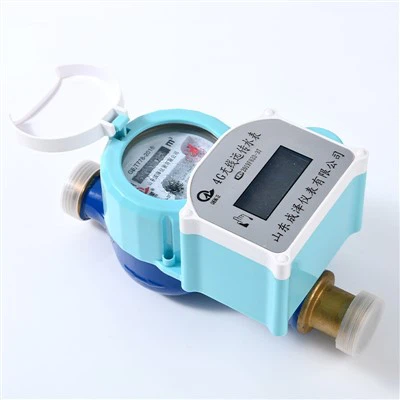
Now, back to the main question. Short answer: Some mechanical water meters can handle high pressure—most can’t. That’s not a cop-out, that’s just the truth. Let’s break down why mechanical meters work, first. A standard mechanical meter is basically a little chamber with a rotating impeller (or piston, or turbine, depending on the type) that spins when water flows through it. The faster the spin, the more water is moving, and that spin gets translated into a reading on the display. Simple, mechanical, no fancy electronics (wait, some are “smart” but still have a moving part), and that’s why they’re cheap, reliable, and the workhorses of the water metering world.
But pressure is a big deal for those moving parts. Think of it like a bike tire: if you pump it way over the recommended PSI, the tube stretches too much, the valve might blow, and the whole thing could fail. Same idea with a mechanical water meter. The internal components—impellers, bearings, seals, the meter housing itself—are built for a specific pressure rating. Most standard residential or light commercial meters are rated for 100 PSI max. Push them past that, and two things happen: either the moving parts get warped or damaged from the extra force, or the housing (usually plastic or thin metal) cracks, and you start leaking water everywhere. I’ve had a customer tell me they installed a standard meter on their industrial booster line at 120 PSI, and it failed in 2 weeks—total water damage to their stock room, not fun.
Wait, but not all mechanical meters are created equal. That’s where the magic (well, engineering) comes in. Our company makes mechanical meters specifically rated for high-pressure systems, and I’ll tell you what we do differently so you get why they work. First, the housing: instead of thin polypropylene for residential meters, we use heavy-duty ductile iron or forged brass. Those materials can handle way more force—up to 200 PSI, in fact, which covers almost every high-pressure system you’ll run into. Then the internal components: the impeller isn’t made of flimsy plastic, it’s glass-filled nylon or stainless steel, so it won’t warp or deform when extra pressure is pushing on it. Even the bearings we use are precision ceramic, not the cheap steel ones that get worn out fast under high pressure. We also add extra seals around the moving parts—rubber or silicone gaskets rated for high PSI, so water doesn’t seep into places it shouldn’t, even when the system’s cranked up.
But here’s a caveat I have to stress: even a high-rated mechanical meter won’t work if you ignore flow rate. I’ve seen people buy a 200 PSI rated meter and stick it on a tiny line that only flows 5 GPM, and it still fails. Because pressure and flow rate are two different things. Pressure is the force of the water pushing, flow is how much water’s moving. A high-pressure meter is built to handle the force, but you still have to match the meter size to the flow rate of your system—otherwise, the impeller is either spinning too slow (so it can’t register correctly) or too fast (wearing out parts early). That’s the number one mistake people make when sizing meters, and it doesn’t matter if it’s high-pressure or not.
Another thing to consider: what kind of high-pressure system are we talking about? If it’s a closed system, like a boiler loop that’s consistently at 120 PSI, a mechanical meter will work fine. The constant pressure doesn’t beat up the parts as much as fluctuating pressure. If your system has pressure spikes—like when a pump kicks on, or a valve slams shut—those sudden jolts are way harder on meters than steady pressure. For spikes, you need something with even more robust components, maybe a meter rated for 250 PSI, because spikes can hit 180 PSI even if your normal pressure is 100. Our high-pressure mechanical meters handle spikes up to 220 PSI, which is the sweet spot for most commercial and industrial systems.
Now, let’s compare this to other meter types, just to put it in perspective. Some people ask, “Why not use an electronic meter instead if high pressure is an issue?” Electronic meters usually have no moving parts, they use ultrasonic or magnetic technology, but they’re way more expensive, and they need power (batteries or wiring). Plus, they’re way more fragile—if the power goes out, you lose your reading. Mechanical meters, even high-pressure ones, are simpler, cheaper to maintain, and way more reliable for long-term use. They don’t need power, so they’ll work no matter what, and parts are easy to replace if something does go wrong. That’s why we still sell way more mechanical meters than any other type, even for high-pressure systems.
But I can’t sugarcoat it—there are limits. If your system is over 250 PSI, a mechanical meter isn’t going to work. We haven’t found a way to build a mechanical impeller that can handle that kind of force without failing quickly. For super high-pressure (like industrial process lines at 300+ PSI), you’d need a specialized pressure transducer or a magnetic meter, not a mechanical one. But that’s a tiny niche—99% of the high-pressure systems our customers deal with are under 200 PSI, so our mechanical meters are perfect.
Let me share a real example, because that’s what people relate to. Last year, we had a customer who manages a 15-story apartment building in downtown Chicago. Their booster pump system runs at 110 PSI to get water up to the 15th floor. They tried three different standard meters before switching to our high-pressure mechanical model—all three failed within 3 months, leaking water into their utility room. They told me the standard meters’ impellers were warped, and the housing started cracking. We sent them our DN40 high-pressure brass meter, and it’s been going strong for 18 months now. They even said they did a pressure test last month and hit 190 PSI by accident, and the meter didn’t skip a beat. That’s the kind of proof I don’t get from marketing materials.
Another thing: maintenance. Mechanical meters are easy to service, even in high-pressure systems. If something does get dirty (which happens with any water line), you can take the top off, clean the impeller, and put it back in—no special tools, no having to call a technician. Electronic meters would require you to pull the whole unit, send it in for testing, which is way more downtime and cost. That’s a big win for facilities managers who can’t afford to shut down a line for days.
Wait, but what about cold vs hot water? A lot of high-pressure systems are for hot water, right? Boilers, water heaters. Standard mechanical meters can handle hot water up to like 140°F, but our high-pressure ones are rated for up to 212°F (boiling) as long as the pressure is rated, so they work for hot water systems too. That’s another common use case we cover.
Now, let’s get into the actual science, because some of you are probably thinking, “Is this guy just selling stuff, or does he know what he’s talking about?” Let’s break down the pressure rating of a mechanical meter: the rating (like 200 PSI) is the working pressure—meaning the maximum pressure the meter can handle continuously without failing. Burst pressure is way higher, like 400 PSI, but you never want to get near that, because that’s when the housing would break. When we design our high-pressure mechanical meters, we do thousands of pressure tests in our lab—we cycle the pressure from 0 to 200 PSI, thousands of times, to make sure the impeller, seals, and housing don’t fail. That’s how we know they’re reliable.
Common myths I hear all the time: “All mechanical meters are junk for high pressure” and “High pressure breaks all moving parts.” No, that’s not true—it’s about design. You can build a mechanical meter to handle high pressure; it’s just that most manufacturers don’t, because it’s cheaper to make them thin for residential use. We specialize in the ones that are built for tough conditions, so that’s why we get all the high-pressure inquiries.
Now, what do you need to do if you’re thinking of using a mechanical meter in a high-pressure system? First, check your system’s actual working pressure, not just the max. Don’t go by the pressure gauge at the pump—check it with a separate test gauge, because sometimes gauges are off. Then, confirm your flow rate—calculate how much water is moving through the line per minute, so you can size the meter correctly. If you’re not sure, reach out to us—we have a free sizing guide on our site (no, this isn’t a sales pitch, it’s actually useful), and our team will help you pick the right meter. Don’t guess, because that’s when things go wrong.
Also, if your system has pressure spikes, consider adding a pressure relief valve upstream of the meter. That’ll take the edge off sudden spikes, which will make the meter last way longer. It’s a cheap add-on, like $20, but it extends the meter’s life by years. We recommend that to every customer with fluctuating pressure, and it’s saved a lot of them from having to replace meters every few months.
Wait, let’s circle back to the original question to make sure we’re answering it clearly. So, can a mechanical water meter be used in high-pressure systems? The answer is a definitive yes—if you get the right one. Standard mechanical meters are only rated for low pressure, but high-pressure rated mechanical meters (built with heavy-duty materials, robust internal parts, and designed for PSI over 100) work perfectly for almost all high-pressure applications, from commercial boilers to tall building plumbing to industrial booster lines. They’re more reliable, cheaper, and easier to maintain than electronic alternatives, which is why they’re the best option for most people.
Now, if you’re someone who’s dealing with a high-pressure system, whether it’s a new install or replacing a broken meter, and you want something that’s actually built to handle the pressure (no more failed meters, no more water damage), hit us up for a chat. Our team doesn’t do high-pressure fluff—we’ll ask you about your system’s PSI, flow rate, and whether it’s hot or cold water, and help you pick the exact meter you need, no pressure to buy something you don’t. We’ve been doing this for years, so we know what works for different setups, and we’re here to help you avoid the headaches we’ve seen from all the wrong meters out there.
Before I wrap this up, a quick note: I’m not saying mechanical meters are for all high-pressure systems. If you have a system over 250 PSI, you’ll need a different type of meter, and we’ll tell you that too—we’re not here to sell you something that doesn’t work for your needs. But if you’re in the 40–200 PSI range, a mechanical meter is the way to go.

Alright, that’s my take on this whole question. No fancy words, no hidden agendas, just real talk from someone who’s been in the game fixing and selling meters for years. If you have more questions, or need to size a meter for your high-pressure system, reach out anytime. We’re here to help.
Smart IC Card Water Meter References:
- American Water Works Association. (2020). Water Metering Manual, 5th Edition. AWWA.
- Hydraulic Institute. (2019). Guidelines for Pressure System Component Rating and Selection. HI.
- International Plumbing Code. (2021). Chapter 6: Water Supply and Distribution. ICC.
- National Institute of Standards and Technology. (2018). Flow Measurement Handbook, 3rd Edition. NIST.
Shandong Chengze Instrument Co., Ltd.
We’re well-known as one of the leading mechanical water meter manufacturers in China, featured by quality products and good service. Please rest assured to buy high-grade mechanical water meter for sale here from our factory. Also, customized service is available.
Address: No.7, Wensi Road North Industrial Park, Liguan Town, Lanshan District, Linyi City, Shandong Province, China
E-mail: czwatermeter@163.com
WebSite: https://www.cz-watermeter.com/
