If you’ve ever stood beside a commercial deionized water system on a production line, watching it supply water critical to pharmaceutical manufacturing, lab testing, or electronics cleaning, you’ll notice a quiet, unassuming piece of equipment. Most operators check its conductivity reading, change its resin beds on schedule, and move on to the next task—rarely pausing to ask how pressure, one of the system’s most fundamental operating parameters, shapes its performance. As a supplier who’s worked with deionized (DI) water systems for over a decade, I’ve seen firsthand how mismanaged pressure can turn a reliable system into a source of costly downtime, product defects, and regulatory headaches. It’s a topic that doesn’t make many production team top-of-mind checklists, but it’s non-negotiable for consistent, high-purity water. Deionized Water System
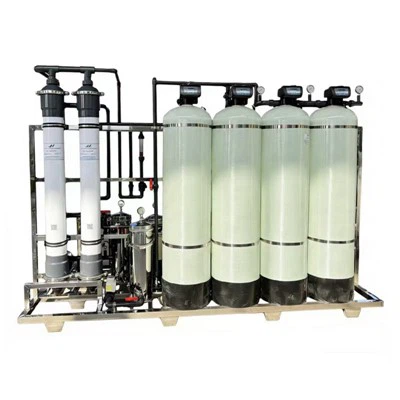
First, let’s ground this in what a DI water system actually does, and how pressure fits into its mechanics. A standard DI system uses ion-exchange resins to strip dissolved minerals—like calcium, sodium, and chloride ions—from tap, reverse osmosis (RO) permeate, or other feed water, turning it into water with conductivity below 1 microsiemens per centimeter (µS/cm) and often as low as 0.055 µS/cm (near-pure water). The pressure that drives the system comes from two places: feed water inlet pressure (the force pushing water into the system’s pre-filters and RO unit before it reaches the DI resins) and the pressure of the water as it exits the system’s final polishing stage to your process.
Let’s start with the often-overlooked role of inlet pressure. For many small-scale users, this is just their building’s water pressure—usually between 40 and 80 psi. But even within that range, deviations can throw off performance. When inlet pressure is too low, water moves through the system at a slower rate. On the surface, that might sound like it gives the resins more time to grab ions, which would be good for purity. But that’s not how ion exchange works. DI resins are porous beads, and low pressure means water doesn’t penetrate the full depth of the resin bed. Ions can slip through gaps in the water flow, staying dissolved instead of binding to the resin. I’ve seen this happen at a local medical device plant: their DI system’s feed line was reduced to a trickle after a partially closed valve, and their finished water conductivity spiked to 5 µS/cm—high enough to cause rust on stainless steel implants during sterilization. The plant had to reprocess 20 batches, costing them $12,000 in materials and delays. That’s the kind of avoidable loss that comes from ignoring inlet pressure.
On the flip side, too much inlet pressure creates a different set of problems. DI systems, especially skid-mounted industrial models, are rated for a maximum operating pressure—usually around 100 to 125 psi for standard units. Exceeding that can damage resin beads, crush them into fine particles, or crack the fiberglass vessels that hold the resin. When that happens, the resin can’t exchange ions effectively, and those fine particles can even flake off into your finished water. I had a customer in the semiconductor industry learn this the hard way: their team rigged a temporary feed pump after a line break, pushing pressure to 140 psi. Within three weeks, their DI system failed a purity test, and they found resin particles in 12 silicon wafers, ruining a $50,000 batch. They ended up needing a full resin replacement and a pressure regulator upgrade—costly mistakes that came from a basic misjudgment of pressure limits.
Now, let’s talk about the second side of pressure: outlet pressure, which is the force with which finished DI water leaves the system and enters your process. This is a critical factor for processes that rely on DI water to avoid contamination or damage. For example, in the pharmaceutical industry, injectable drug formulations require DI water with absolute zero particulate count, and high outlet pressure can create what’s called “jetting” or even shear stress that dislodges minute particulates from the system’s pipework or fittings. That’s a major compliance risk: the FDA’s 21 CFR Part 211 requires water for drug production to be free of extraneous substances, and a single particulate from jetting can lead to a product recall. I worked with a lab that produces parenteral solutions for hospitals; their outlet pressure was set to 90 psi, and their filtration system was clogging twice as often as expected, leading to 20% higher filter replacement costs. We adjusted their outlet pressure to 55 psi, and the filter lifespan doubled—no loss in process flow, just improved consistency.
But outlet pressure isn’t just a concern for high-stakes industries. Even in commercial car washing, where DI water is used to avoid water spots, too high an outlet pressure can cause the water to atomize, leaving microscopic mineral residues on the paint. That’s a small defect compared to pharmaceutical or semiconductor issues, but it still translates to lost revenue for car wash operators who can’t deliver a spot-free finish.
Another often-missed link between pressure and DI system performance is resin regeneration. Most industrial DI systems use mixed-bed resins, which need to be regenerated (recharged with ion-exchange sites) once their capacity is used up. Regeneration relies on pressure to pull the regenerant chemicals—acid for cation resins, caustic for anion resins—through the resin bed. If pressure during regeneration is too low, the chemicals don’t circulate evenly, leaving some parts of the bed depleted and others over-saturated. That means the next batch of DI water will have inconsistent purity. I had a food and beverage client that brewed craft beer, relying on DI water to control the pH of their mash. Their system’s regeneration cycle was failing, leading to inconsistent pH levels that altered their beer’s flavor. We tested the regeneration pressure and found it was only 10 psi too low; adjusting it fixed the pH consistency, and their beer’s quality scores went up by 15% in a month.
So what’s the sweet spot for pressure? It’s not a one-size-fits-all number, but it’s a set of parameters tailored to your specific DI system, feed water quality, and process needs. For standard commercial DI systems, inlet pressure should stay between 50 and 75 psi, with a pressure regulator installed before the system to prevent spikes. Outlet pressure should be adjusted to match your process—usually between 40 and 60 psi for most industrial applications, with lower settings for sensitive processes like semiconductor manufacturing.
The good news is that many of these issues are easy to avoid with simple monitoring. We recommend our customers install a basic pressure gauge at the system’s inlet and outlet, and log readings daily—small checks that take 2 minutes a day but prevent hours of downtime. For larger operations, we offer automated pressure control systems that adjust feed pressure in real time based on conductivity readings, so if a feed water spike causes pressure to drop, the system compensates without operator intervention.
I’ve had customers come to us after years of vague problems: inconsistent water purity, unexpected resin replacements, process delays, all traced back to a pressure issue they never considered. It’s easy to overlook pressure when you’re focused on conductivity, resin life, and compliance, but it’s one of the most impactful variables in how your DI system performs. Every DI water system is only as good as the conditions it runs under, and pressure is the foundation of those conditions.
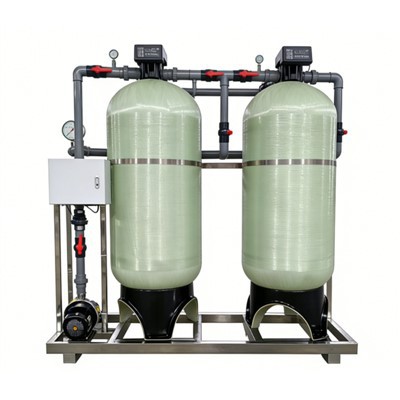
If you’re dealing with unexpected DI system performance, or you’re looking to upgrade your system with pressure monitoring and control, we’re here to help. We work with businesses across industries to design, install, and maintain DI water systems tailored to your specific needs, including pressure adjustments that will boost purity, extend resin life, and reduce operational costs. Contact us to discuss your system’s pressure needs and find a solution that fits your process.
RO Purified Water Equipment References
- ASTM International. (2020). Standard Practice for Deionized Water Quality for Industrial Applications. ASTM D4193-20.
- ISO 3696:1987. Water for Analytical Laboratory Use—Specification and Test Methods. International Organization for Standardization.
- Crittenden, J. C., et al. (2012). Water Treatment: Principles and Design (2nd ed.). John Wiley & Sons.
- U.S. Food and Drug Administration. (2023). Guidance for Industry: Water for Pharmaceutical Use. CFR 211.160.
- American Water Works Association. (2018). Reverse Osmosis and Nanofiltration. AWWA Manual M53.
Shandong Yanuo Environmental Protection Equipment Co., Ltd.
We’re well-known as one of the leading deionized water system manufacturers and suppliers in China, featured by quality products and good price. Please rest assured to buy bulk deionized water system made in China here from our factory. Customized orders are welcome.
Address: North Side of the Road, 1,000 Meters West of the Intersection of Fenghuangshan West Road and Provincial Highway S102, Wangfu Subdistrict, Qingzhou City, Weifang City, Shandong Province.
E-mail: ynhb.499973983@gmail.com
WebSite: https://www.zkyaruo.com/
