Hey everyone, I’m Jake, and I’ve been working as an EDI pure water system supplier for almost 10 years now. So many people who reach out to me—whether they’re setting up a new lab, a pharmaceutical clean room, or a food and beverage bottling line—always ask the same question: “EDI vs. RO systems, which one do I actually need?” It makes total sense, right? If you’re new to water treatment, the lingo can get super confusing fast. I’ve seen folks waste time and money picking the wrong system because they didn’t get the real difference, not just the textbook definitions. Let me break this down like I’d explain it to a friend who’s just starting to look into this. EDI Pure Water System
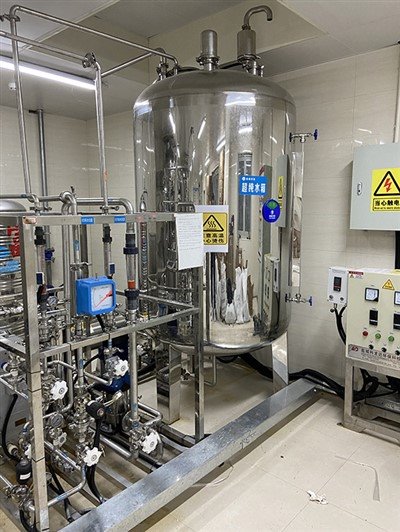
First, let’s start with what each system does, because that’s the base. RO stands for Reverse Osmosis, which is probably the one you’ve heard of more often— it’s been around longer, used in everything from drinking water filters for homes to industrial setups. EDI is Electrodeionization, and that’s a newer, more advanced tech that’s become a game-changer for high-purity applications. But let’s not just throw acronyms around; let’s get into how they actually work, because that’s where the real gaps show up.
RO works by pushing water through a semipermeable membrane at high pressure. That membrane’s tiny pores—like, really tiny, smaller than a nanometer—block contaminants: dissolved salts, minerals, bacteria, even some organic stuff. The water that comes through the membrane is “permeate” (that’s your RO water) and the leftover stuff that gets filtered out is “concentrate,” which you drain or reuse. But here’s the catch: RO does a solid job of removing most impurities, but it’s not perfect. It can’t get rid of all dissolved ions—like, super small ones, such as sodium, chloride, or even some heavy metals, if the membrane’s not perfectly maintained. It also produces a lot of wastewater—usually 15 to 30 gallons of concentrate for every 100 gallons of raw water fed in. That’s a big one for people who care about utility costs or sustainability.
EDI, on the other hand, is a combination of two techs: it takes the water that’s already been pre-treated (usually with RO first) and then uses electricity to strip out the remaining dissolved ions. So it’s not a standalone system—wait, no, let me correct that: you can get standalone EDI, but it’s way more expensive and not practical for most industrial uses. 9 times out of 10, EDI is paired with RO to make high-purity water. The EDI unit has chambers filled with ion-exchange resin (like the stuff in water softeners, but way more precise), and electrodes on each end. When you run electricity through that, the ions in the water get pulled towards the electrodes and trapped, so you end up with water that’s way purer than what RO can do alone. No chemicals, no heat, no downtime— that’s a huge plus for a lot of industries.
Now, let’s talk about purity levels, because that’s the biggest reason to pick one over the other. Let’s put this in numbers so it’s not vague. RO water typically has a resistivity of around 1 to 10 megaohm-centimeters (MΩ·cm). Wait, what’s resistivity? It’s a measure of how well water conducts electricity—lower conductivity means higher purity, higher resistivity. So tap water is like 0.001 MΩ·cm, RO is way better, but EDI? EDI paired with RO gets you up to 18.2 MΩ·cm. That’s the gold standard for ultrapure water— that’s the kind used in pharmaceutical manufacturing, semiconductor chip production, even in high-end lab tests like PCR. If you’re making a drug that’s going to be injected into someone’s body, or cleaning a silicon wafer for a phone chip, you can’t have leftover ions messing that up. RO alone just can’t hit that purity mark. I’ve had pharma clients come to me because their old RO-only system was leaving trace minerals in their final product, causing batches to fail quality tests— that’s a costly mistake, I can tell you.
Next up, maintenance and operational costs. This is where a lot of people are surprised, because they think RO is cheaper upfront, but let’s look at the long game. RO needs regular membrane changes— usually every 2 to 5 years, depending on the water quality and how well you maintain it. Those membranes aren’t cheap— a single industrial RO membrane can run $300 to $800 each, and if you have a multi-unit setup, that adds up fast. Also, RO systems need a lot of pretreatment sometimes— like water softeners, because if hard water gets to the RO membrane, it will scale up (mineral deposits that clog the pores) and ruin the membrane way quicker.
EDI systems? They don’t need expensive membrane replacements. The ion-exchange resin in EDI lasts 5 to 10 years, sometimes more. And here’s the big one: EDI is a “chemical-free” process. A lot of older water treatment systems use deionization (DI) with chemicals like acids or caustics to regenerate the resin. That means handling harsh chemicals, storing them, disposing of the waste— which is not only a hassle but also a safety risk and can get expensive with regulatory compliance. EDI skips all that. I’ve had food and beverage clients switch from RO + chemical DI to RO + EDI, and they cut their chemical costs by like 90% in the first year. The only maintenance EDI needs is checking the electrodes and making sure the power supply is running right— way simpler than RO’s membrane replacements and pretreatment upkeep.
But wait, I don’t want to make it sound like EDI is the answer for everyone. Because size matters, and cost matters a lot. Let’s talk about upfront cost. A basic RO system for a small lab might run $1,000 to $5,000, which is super accessible. An RO + EDI system for the same size lab is going to be 2 to 3 times that, right up front. If you’re a small business or a hobbyist with a home lab that only needs clean water for, say, making craft beer (which actually needs pretty pure water, but not ultrapure), RO is totally fine. But if you’re a pharma company with 24/7 production, or a semiconductor fab that needs water that’s so pure it’s almost distilled, EDI is worth the extra cash because it means less downtime, better product quality, and lower long-term costs.
Also, let’s talk about wastewater, which is a huge point for sustainability. I mentioned earlier that RO wastes a lot of water. Most industrial RO setups waste 20 to 30 gallons for every 100 gallons they process. EDI, since it’s working on water that’s already been filtered by RO, doesn’t add a ton of extra waste. The concentrate from an RO + EDI system is almost the same as RO alone, but you’re getting way more usable water out of it. For facilities in drought-prone areas, that’s a massive perk. I work with a semiconductor plant in Arizona where they switched from an old RO-only system to RO + EDI, and they cut their water usage by 25%— that saved them thousands of dollars a month in water bills, and helped them meet their sustainability goals for the state.
Another thing: consistency. RO systems can fluctuate in purity if the feed water changes. Like, if one day your incoming water is a little harder, or has more dissolved solids, the RO permeate quality drops. EDI, on the other hand, maintains a super consistent purity level because it’s using electricity to strip ions— that’s a steady process, no weird fluctuations. For industries where even a tiny change in water purity can ruin batches, that consistency is non-negotiable. I’ve had a biotech client tell me that their old RO-only system had a 5% batch reject rate because of inconsistent water, and after switching to EDI, that reject rate dropped to less than 0.5%— that’s a huge difference in revenue saved.
Wait, let’s clear up a common mix-up: people often confuse EDI with regular DI deionization. Like, old-school DI systems that use resin beds you have to regenerate with chemicals. That’s different. EDI is a continuous process— no downtime, no changing resin, no chemicals. RO + DI is a three-step process: RO, then DI, then maybe a polish. But RO + EDI is two steps, cleaner, faster, less maintenance. I still get calls from people asking about EDI vs. DI, and I always make sure to explain that— because a lot of people think EDI is just a modern DI, and while it is, it’s way more than that.
Let me also give you a couple of real-world examples so it’s not just theory. A small craft brewery I work with in Portland— they only need RO water for mashing and bottling. They don’t need ultrapure water, just consistent, low-mineral water to make their beer taste the same every time. They went with a basic RO system, and it’s worked great for 3 years. No issues, low upfront cost, easy to maintain. Now, a pharmaceutical company I work with in New Jersey— they make injectable medications, so their water has to meet USP (United States Pharmacopeia) Type 1 standards. That requires 18 MΩ·cm purity. So we installed an RO + EDI system for them. They can’t have any downtime, because every minute their production line is down costs them $10,000+. The EDI system runs 24/7, no resin changes, no chemical handling, and the water purity is spot-on every single day. That’s where EDI makes all the difference.
What about the downsides of EDI? I’d be lying if I said it’s perfect. First, like I said, upfront cost is way higher. If you only need 10 gallons of pure water a day, an RO system is way more cost-effective. EDI is designed for medium to large-scale uses— like 50 gallons a day and up. Second, EDI systems need a reliable power supply. If the power goes out for more than a few hours, you can damage the electrodes. But most industrial setups have backup generators, so that’s manageable. Third, if your feed water is really bad— like super high in dissolved solids— you might need extra pretreatment before EDI, which adds to the cost. But that’s true for RO too, right?
So, to wrap this up (like I’d do for a customer who’s on the fence): the main difference boils down to three things: purity level, cost (upfront and long-term), and what your industry needs. If you’re a small operation that just needs clean water for everyday use, craft beer, car washes, whatever— RO is more than enough, and cheaper. If you’re in pharma, semis, biotech, or any field that needs ultrapure, consistent water— EDI paired with RO is the way to go. It saves you money on maintenance, chemicals, and batch rejects in the long run.
I know this stuff can be overwhelming, so if you’re not sure which system fits your needs, don’t overcomplicate it. Shoot me a message, tell me a little about your operation— what industry you’re in, how much water you need a day, what you’re using the water for. I’ll give you a straightforward, no-fluff answer, no sales pitch, just what will work for you. No hidden fees, no jargon, just real advice from someone who’s been in the game for years.
Don’t waste time and money on a system that doesn’t fit. Reach out whenever you’re ready to chat.
Ultrasonic Cleaner References:
- Water Technology, “Reverse Osmosis vs. Electrodeionization: A Comparative Analysis,” 2022
- USP Guidelines for Purified Water and Water for Injection, United States Pharmacopeia Convention, 2023
- Membrane Technology and Research, Inc., “Industrial Water Treatment: Efficiency and Sustainability, 2021
Shenzhen Jkon Environmental Protection Technology Co., Ltd.
As one of the most professional edi pure water system manufacturers and suppliers in China, we’re featured by quality products and good service. Please rest assured to buy customized edi pure water system made in China here from our factory. Contact us for more details.
Address: Shanghenglang Industrial park, Daloang Street, Longhua District, Shenzhen, China
E-mail: sales@jkontech.com
WebSite: https://www.jkontech.com/
