If you’re a DIYer, a weekend warrior, or someone who just needs a reliable tool for quick home fixes, you’ve probably stared at a shelf full of angle grinders at the hardware store and thought, “Wait—what size do I even need?” Trust me, I’ve been there. As a brushless angle grinder supplier, I hear this question at least 10 times a day from customers scratching their heads over 4-inch vs. 4.5-inch vs. 5-inch models. The good news is, it’s not as complicated as it sounds. We’re gonna break this down like we chat at the shop—no jargon, no fancy fluff, just the straight stuff you need to pick the right one for your home. Brushless Angle Grinder
First, let’s get one thing out of the way: brushless motors are non-negotiable for home use these days. Old-school brushed grinders lose power over time, burn out faster, and are way less efficient. Brushless units run cooler, last longer, and give you more torque when you need it without wasting energy on extra heat. That’s why all our grinders are brushless, and why you should prioritize that over a random unbranded model. Now, size—what does that even mean? When we talk about angle grinder size, we’re referencing the diameter of the grinding disc it uses. So 4-inch = 4 inch disc, 4.5-inch = 4.5 inch, etc. Easy enough.
Let’s start with the tiny one: 3-inch. Wait, some people might not even know these exist. They’re super compact, like the size of your phone, and perfect for tight, small jobs. Like, if you need to grind down a rust spot on a bike frame, trim a thin piece of metal for a shelf bracket, or smooth out a tiny weld bead on a backyard project. But here’s the catch: their small disc size limits what they can handle. If you’re trying to cut through a 2×4 or grind down a thick section of tile, a 3-inch will spin too slow, get stuck, and you’ll end up forcing it—bad move, that’s how you slip and hurt yourself. For most home users, a 3-inch is way too limited. It’s great for niche tiny jobs, but not your go-to grinder.
Next up, the most popular pick for home use: 4.5-inch. This is the sweet spot, no question. Let’s run through the jobs it can handle. First, cutting tile. Most standard ceramic or porcelain tile for bathroom floors or backsplashes cuts like a dream with a 4.5-inch diamond blade. You don’t have to rent a big tile saw anymore—this grinder does the trick in half the time. Then there’s metal work. If you need to cut through 1/4-inch steel plate, trim a old metal fence post, or grind down sharp edges on a set of wrought iron railings, the 4.5-inch has enough torque and disc size to get that done without breaking a sweat. Even wood? Wait, yes—if you get a wood carving disc, a 4.5-inch can shape lumber for a garden bench or carve rough edges on a sign. But don’t sleep on the downsides: it’s not ideal for extra thick materials. If you’re trying to cut through 1-inch steel, you’ll need two passes with a 4.5-inch, whereas a 5-inch would do it in one. Also, the handle is a bit smaller than a 5-inch, so if you have big hands, that might feel cramped after 20 minutes of work.
That leads us to the 5-inch, which we get a lot of questions about. Is it overkill for home use? It depends. Let’s be real: if you’re only using your grinder once a month to grind a sharp edge on a kitchen knife or cut a thin piece of metal, a 5-inch is totally unnecessary. It’s heavier, more expensive, and you’ll have more power than you need. But if you’re someone who takes on bigger home projects—like renovating a garage, replacing old metal pipes, or building a backyard deck that involves cutting thick wooden beams or steel framing—then the 5-inch is worth it. More disc size means deeper cuts, less force needed, and it’s still manageable for occasional use, not just professional jobs. Another thing: 5-inch grinders often have longer battery life (if you’re going cordless, which most home users prefer these days) because their motors are a bit more efficient for heavier tasks.
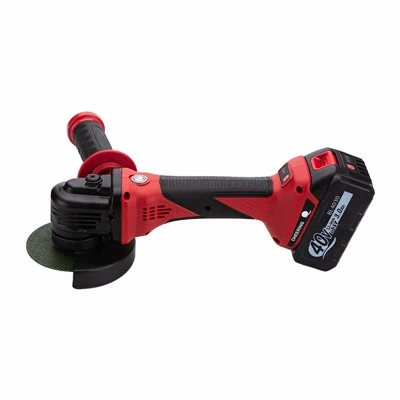
Wait, what about corded vs. cordless? That ties into size too, right? For home use, cordless is way more convenient—no extension cords dragging across your yard or basement, no worrying about tripping over something when you’re working in a tight space. But if you’re doing heavy, prolonged work (like a full day of grinding for a deck renovation), a corded 4.5 or 5-inch is still better, no battery dying halfway through. But most of our home customers go cordless 4.5-inch, and that’s exactly what I’d recommend for 90% of people. It’s portable, powerful enough, and fits in a tool bag easily.
Now, let’s talk about mistakes I see all the time from home users picking the wrong size. First, people buy a 6-inch grinder because they think “bigger = better” for every job. A 6-inch is a pro tool for construction sites, made for cutting thick concrete or large steel beams. It’s too heavy, too bulky, and more than you need for any home project. You’ll struggle to control it, and you’ll waste money on a tool you’ll pull out once a year, max. Another mistake: buying a 3-inch and trying to use it for big jobs. I’ve had customers come back to us saying their 3-inch grinder died after trying to cut a 1-inch steel rod—turns out, it’s not designed for that, and they overworked the motor prematurely. That’s why knowing your use case is key.
Let’s break down exact use cases to make it easier, okay? If you’re…
- Only doing small, occasional jobs (trimming metal brackets, grinding small rust spots on a bike, smoothing tiny welds): 3-inch is fine, but honestly, a 4.5-inch will still work, just a little heavier.
- Doing medium jobs every few months (renovating a bathroom, cutting tile, fixing fence posts, grinding down sharp edges on furniture): 4.5-inch cordless brushless is your perfect match. It’s light enough to hold for 30 minutes, powerful enough for the jobs you’ll throw at it, and not too expensive.
- Taking on large, frequent projects (building a deck, replacing plumbing pipes, resurfacing a concrete patio, doing regular metal work): 5-inch, either cordless or corded, depending on how long you work.
Also, let’s talk about why brushless matters here, beyond just the basics. For home users, you don’t want a tool that dies after 6 months. Brushed grinders have carbon brushes that wear out fast, and if you’re not using your grinder every day, those brushes can even corrode. Brushless grinders have no brushes, so less maintenance, longer lifespan, and better power delivery. We’ve had home customers use our 4.5-inch brushless grinders for 3 years straight, pulling it out for weekend projects, and they’re still going strong—no weird power cuts, no overheating. That’s the value of going brushless, not just a buzzword.
Wait, what about accessories? A common question: can I use the same accessories on different size grinders? Not really. A 4-inch disc won’t fit a 4.5-inch grinder, so you have to buy the right disc for your size. That’s why picking the right size from the start saves you money in the long run—you don’t have to buy a bunch of random discs that don’t fit, or adaptors that might break and be a safety hazard. Safety, by the way—don’t skip that. No matter what size you get, always wear eye protection, a dust mask, and gloves. The disc will send sparks and debris flying, and even a tiny piece of metal can hurt you. We always tell customers to match their disc size to their grinder—never force a disc on a grinder it’s not made for, that’s how accidents happen.
Let’s address the budget angle, too. I know home users don’t want to drop $200+ on a grinder if they’re only gonna use it a few times a year. Our 4.5-inch cordless brushless grinder is around $80-$100, which is totally reasonable. The 5-inch is around $120-$150, and the 3-inch is even cheaper, around $50. But here’s the thing: a cheap brushed grinder might last 6 months, while our brushless 4.5-inch will last 3+ years. So you’re actually saving money in the long run by going with a mid-range brushless model, not the super cheap one at the big box store. The cheap ones often have weak motors that stall easily, which is frustrating when you’re trying to get a job done.
Wait, let’s test this with real examples. Last month, a customer came to us looking for a grinder for his bathroom remodel. He needed to cut 12×12 porcelain tile, grind down some old mortar on the floor, and trim a metal vanity frame. He had a 6-inch grinder he borrowed from a neighbor, and he said it was so heavy he got a cramp in his wrist after 10 minutes. We recommended our 4.5-inch cordless brushless, and he came back a week later to say it was perfect—light enough to hold for 2 hours, cut the tile easy, and worked way better than the neighbor’s heavy 6-inch. Another customer was building a backyard deck, needed to cut 2×6 lumber and 1-inch steel railing posts. We suggested the 5-inch corded brushless, and he said it cut through the steel in one pass, no struggling, way faster than his old brushed 4.5-inch.
So putting it all together: for 90% of home users, the 4.5-inch brushless angle grinder is the right pick. It’s versatile enough for all the common home projects, not too heavy, not too expensive, and lasts way longer than old brushed models. The 5-inch is great if you’re doing bigger projects regularly, and the 3-inch is only for super small, niche jobs. Whatever you pick, skip the brushed models—brushless is worth the extra cash upfront.
If you’re still not sure which size fits your exact needs, or want to check out our range of brushless angle grinders for home use, we’re here to help with any questions. We’re happy to walk you through the features, compare models, or give recommendations based on the projects you have planned. Feel free to reach out to discuss what’s best for you.
Electrical Angle Grinder References:
- Consumer Reports. (2022). Power Tool Buying Guide: Angle Grinders for Home Use.
- Tool Product Performance Association. (2023). Brushless vs. Brushed Motor Lifespan in Handheld Power Tools.
- DIY Home Improvement Association. (2024). Recommended Tool Sizes for Common Residential Projects.
- Woodworking and Metalworking Journal. (2023). Safety Best Practices for Angle Grinder Use at Home.
Zhejiang Cheering Sewing Machine Co., Ltd.
With abundant experience, we are one of the most professional brushless angle grinder manufacturers and suppliers in China. Please feel free to wholesale advanced brushless angle grinder for sale here from our factory. We also accept customized orders.
Address: No.69 Heping Road, Lishui, Zhejiang, China
E-mail: gxjlq@126.com
WebSite: https://www.cheering-machinery.com/
