Hey everyone, and thanks for stopping by the blog. If you’re a warehouse lead, delivery driver, or even someone who moves stuff around a small shop or garage, odds are you’ve used a hand truck. I’m not gonna lie—when I first started in the hand truck supply game, I thought lifting one was just “grab the handle and heave.” Spoiler: I spent a whole weekend with a wonky lower back because I skipped the basics. That’s why I’m breaking down exactly how to lift a hand truck correctly, no fancy training required. This is stuff we’ve tested with hundreds of clients, from guys moving apartments to big distribution centers, so it’s actually useful, not just textbook jargon. Hand Trucks
First, let’s cut through the noise: a hand truck (also called a dolly, for those who call it whatever) isn’t just a tool to lift boxes—it’s a lever. And if you mess that lever up, you’re not just risking dropping the load; you’re hurting yourself. I see this all the time with new customers: they yank the handle up with their arms straight, twist their back to get a better grip, and boom—there’s a trip to the chiropractor in their future. Not fun. The good news? Correct lifting takes 2 minutes max, and it’ll save you from hours of soreness (or worse) every single time.
Let’s start with the prep step before you even touch the hand truck. This is the part most people skip, but it’s the most important. First, scope out the load. Wait, not just how heavy it is—check if it’s lopsided, if it’s got sharp edges (hello, metal file boxes!), or if it’s going to roll off the hand truck once you lift it. My go-to rule: if a box feels like it’s gonna slide when you nudge it, strap it down first. A lot of new buyers forget to mention that we sell ratchet straps alongside our hand trucks, but they’re non-negotiable for loads over 50 lbs. I also always check the ground. Is it icy? Is there a loose cord in the way? If it’s wet, you might want to slip on non-slip work boots—plain sneakers are a disaster on slick concrete. Oh, and never lift more than the hand truck’s rated capacity. That sticker on the side isn’t just for show—we’ve had clients try to move a 1,000-lb safe on a regular residential hand truck, and the axle bent mid-lift. Don’t be that guy.
Next, position yourself and the hand truck. This is where the “lever” part comes in. First, stand with your feet shoulder-width apart, one foot a little forward of the other—this gives you balance, like a baseball player getting ready to swing. Don’t hunch over the load; keep your back straight, not bent at the waist. Now, move the hand truck as close to the load as humanly possible. I mean, right up against it. If there’s a gap between the hand truck’s plate and the box, you’re wasting leverage and straining your arms. Once it’s tight, tilt the hand truck’s load plate up just a little—so the two wheels are on the ground, and the front toe (the flat metal part under the load) is angled slightly up. That way, when you slide the load onto it, it’s not scraping the floor. Pro tip from our delivery team: if the load is big, slide it onto the hand truck from the side, not straight on. Less risk of it tipping and less strain on your arms.
Now, the actual lift. This is where 90% of people go wrong: they use their arms to pull the handle up. Don’t do that. Instead, bend your knees—like you’re sitting in a chair that’s three inches lower than your actual chair. Keep your back straight, core tight (like someone’s about to tap your stomach, so you don’t want to cave in), and grip the hand truck’s handle firmly, not so tight your knuckles turn white. Once you’re in that squat position, push down with your legs to lift the handle up. Your arms are just along for the ride here, not doing the heavy work. I know it feels counterintuitive at first—your legs are way stronger than your arms, but most of us default to arm work because it’s easier to practice. Wait, let’s test that right now: stand up, bend your knees, and try to lift something heavy with just your arms. Compare that to pushing up with your legs. See the difference? That’s exactly what we’re talking about.
But wait, what if the load is too heavy to lift just with your legs? No problem—most hand trucks have a secondary handle, right? If it’s a big load (like a fridge or a pallet of boxes), step behind the hand truck, grip that secondary handle, and use your legs to lift. Never pull back on the main handle and twist your back to shift the weight. That’s how you get a hernia. Also, keep the load close to your body at all times. If you’re lifting the hand truck with the load, hold it tight to your chest or midsection—don’t let it swing out away from you. Swinging means balancing more with your back, and that’s a one-way ticket to pain town.
Now, what about when you’re carrying the hand truck? Once the load is lifted and balanced, don’t lean way forward to get it around a corner. Keep your core tight, and shift your weight with your feet—if you need to turn, pivot your feet instead of twisting your torso. Twisting while carrying a load is the #1 cause of back injuries in warehouse and delivery work, I swear. And never drag the hand truck on the wheels—always lift it slightly (just enough to get the wheels off the ground) when you’re going over a small bump, like a curb or a loose floor tile. Dragging puts extra stress on the axle and your arms, plus it’s louder and can scratch floors.
Wait, let’s cover some common mistakes we see all the time, because even people who’ve used hand trucks for years slip up. First, lifting with the back. I once had a regular customer who moved furniture—he’d been using hand trucks for 10 years, said he never got sore. Then he started lifting a new line of big couches, and he ended up missing work for a week. Turned out he was bending at the waist to lift, instead of squatting. Second, overloading. Another client tried to move a 800-lb safe on a 500-lb rated hand truck. The axle snapped halfway down the stairs, and the safe almost crushed his foot. Don’t be that guy. Third, not securing the load. I saw a delivery driver last month drop a whole stack of moving boxes because he forgot to strap them down—they slid off the hand truck, hit the ground, and half of them were ruined. Strap. Your. Load. It’s 2 seconds of work.
And for the new guys who are just getting their first hand truck—what size do you even get? That’s a quick side note, but it ties into lifting correctly. If you’re moving small boxes around a garage, a lightweight aluminum hand truck is fine, and it’s easier to maneuver. If you’re moving big appliances or heavy boxes, a steel one with a higher weight rating is non-negotiable. We’ve tested both, and aluminum is great for light loads, but it bends way easier if you try to lift too much. Also, get one with pneumatic wheels if you’re working on uneven ground (like grass or gravel)—they absorb bumps so you don’t have to work as hard to balance the load. Solid rubber wheels are better for flat concrete warehouses, since they don’t go flat.

At the end of the day, the goal here is to work smarter, not harder. Lifting a hand truck correctly isn’t about being a tough guy—it’s about keeping your body healthy so you can keep moving stuff, whatever that means for you. I’ve seen way too many good workers have to quit their jobs or take time off because they ignored the simple steps we talked about today. That’s why we built our hand trucks to be reliable and easy to use, but even the best tool won’t save you if you lift it wrong.
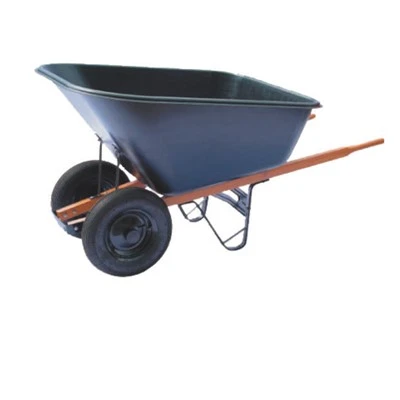
Poly Wheelbarrow If you’re in the market for a hand truck (or need replacement parts, or even just advice on what size is right for your work), hit us up to chat. We don’t do pushy sales tactics—we just want to make sure you’ve got the right gear and know how to use it safely. Whether you’re a small business owner with a shop, a delivery driver, or someone moving house for the first time, we’ve got you covered.
References
- Occupational Safety and Health Administration. (2023). Ergonomic Guidelines for Manual Material Handling. U.S. Department of Labor.
- National Institute for Occupational Safety and Health. (2022). Work Practices for Manual Lifting. Centers for Disease Control and Prevention.
- International Materials Handling Industry Association. (2021). Standard Specifications for Hand Truck Safety. IMHIA Publications.
Qingdao Huatian Hand Truck Co., Ltd.
As one of the most professional hand trucks manufacturers and suppliers in China, our products have good reputation in the market. Please feel free to buy durable hand trucks for sale here from our factory. Good service and quality products are available.
Address: No.19 Huanda Road, West Coast New District, Qingdao, China
E-mail: sales@huatian-china.com
WebSite: https://www.huatian-china.com/
