If you’ve ever been in the market for industrial valves—whether you’re a plant manager, process engineer, or procurement lead—chances are you’ve heard “double offset butterfly valve” and “triple offset butterfly valve” thrown around a lot. And honestly? For a long time, I used to mix them up too. At our butterfly valve shop, we’ve been working with these designs for over a decade, and I’ve seen first-hand how the line between them makes all the difference for specific applications. No two valves work exactly the same, and picking the wrong one can lead to leaks, downtime, or even costly repairs down the line. Let’s break this down like I would to a guy who just walked into our warehouse asking which one he needs for his chemical processing line. Butterfly Valve
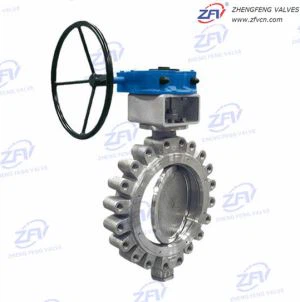
First, let’s start with the basics: a standard butterfly valve is just a round disk that pivots on a shaft inside a pipe, right? Turn the handle, the disk spins, and it opens or closes the pipe. But offset designs tweak that pivot setup to fix a big flaw in standard valves—namely, how they seal. Standard butterfly valves have the shaft running straight through the disk, centered in the middle, so when the disk closes, it rubs against the seat every single time it opens or closes. That friction wears out the seat fast, leading to leaks. So offset valves move that pivot off-center to cut down on that friction, and that’s where double vs triple comes in.
Double offset butterfly valves—let’s call them DOBVs for short, because we say that all the time around here—have two offsets. The first is the shaft is offset from the center of the pipe (that’s the first offset) and also offset from the center of the disk (that’s the second). So the disk doesn’t rotate around the middle of the pipe. Instead, when you open the valve, the disk pulls away from the seat almost immediately, instead of dragging across it. That cuts down friction by a ton, so the seat lasts way longer than a standard valve. But here’s the catch: double offset valves still have a slight contact between the disk and seat when they’re closing. It’s not a full rub, just a narrow line, but it’s enough that they’re not perfectly tight for really high-pressure or high-temperature applications, or for fluids that are super corrosive or toxic.
Triple offset butterfly valves, or TOBVs like we shorthand them, take that offset idea and add a third one. Wait, not just another off-center shift—this third offset is an angular one. The seat isn’t a flat ring anymore; it’s a conical (or angled) surface that matches the angle of the disk’s pivot. What does that do? When you open a triple offset valve, the disk doesn’t just pull away from the seat—it actually disengages completely before it starts rotating. No contact at all during the full open or close motion. That’s a game-changer for sealing. No wear on the seat or disk stem because there’s no friction when moving.
Let’s get into the real-world stuff, not just engineering specs. I’ve sold double offset valves for applications like water treatment, HVAC systems, and general industrial fluid lines where pressure is moderate—like up to 150 PSI, temperatures between -20°F and 400°F. They’re cheaper than triple offsets, way easier to maintain, and for a lot of jobs, they work perfectly. Last year, we supplied a set of double offset valves to a food processing plant for their process water lines. They’ve been running them 24/7 for 18 months, no leaks, no seat replacements. That’s exactly where double offsets shine: when you need reliable, cost-effective performance for non-extreme conditions.
Triple offsets, though? I only send those when a customer tells me they’re dealing with something tougher. High pressure—like 300 PSI and up, for oil and gas pipelines, chemical processing, or power plants. High temperatures too—over 400°F, even up to 1000°F for some metallurgies. And if the fluid is toxic, hazardous, or prone to leakage that could be a safety risk—like in pharmaceutical manufacturing where even a tiny leak of a drug ingredient would ruin a batch, or in nuclear facilities where you can’t afford any leaks of radioactive fluid. Triple offsets have a bubble-tight seal, which means zero leakage when closed, way better than double offsets. They also last way longer in those harsh environments because there’s no friction to wear parts down. A triple offset valve in a refinery might last 10 to 15 years, compared to a double offset which might last 5 to 8 in the same kind of service.
Wait, but there are downsides to both, right? I don’t sell a valve as “perfect” because there’s no such thing. Double offsets are not good for extreme temps or pressures, and their seal isn’t as tight. They also might not work for low-temperature cryogenic applications, because the slight seat contact can lead to leaks when metals expand or contract. Triple offsets? They’re pricier upfront. A triple offset valve can cost 20 to 50% more than a double offset of the same size. They’re also a little more complex to install and maintain—you have to make sure that conical seat is aligned right, because if it’s off even a fraction, you lose that bubble-tight seal. I always tell customers: if you don’t need that extreme performance, a double offset is a no-brainer. It’s cheaper, simpler, and does the job just as well. But if you’re dealing with anything that’s high-risk, high-stress go triple.
Another thing people don’t talk about enough: flow characteristics. Both offsets have a nearly full bore (the opening in the disk is almost the same size as the pipe), so flow is really efficient, no pressure drop like you get with ball valves or gate valves. But double offsets, because the disk is closer to the seat when fully open, can cause a tiny bit more turbulence than triple offsets? Wait, no—actually, the triple offset’s disk sits further away from the pipe wall when open, so flow is even smoother, less turbulence. That matters if you’re dealing with fluids that have solids, like slurries. Turbulence can make solids settle, which might cause issues. So triple offsets are better for slurries too, because less turbulence and no seat drag to get debris caught.
I remember a time a few years back, a customer came to us panicking. He had a double offset valve on his chemical processing line, and it was leaking so bad he had to shut down production, which cost him $50,000 an hour. Turns out he was using a double offset for a 600 PSI acid line—way beyond what it was designed for. We swapped it for a triple offset, and he hasn’t had a leak in three years. That’s the kind of call I love to get, because we can avoid that kind of mess.
At the end of the day, the difference between double and triple offset butterfly valves comes down to three things: seal performance, operating conditions, and cost. Double offsets are the workhorses for everyday industrial jobs: water, HVAC, mild chemicals, low pressure/temp. They’re durable, easy to service, and won’t break the bank. Triple offsets are the heavy hitters for high-risk, high-stakes applications: oil and gas, corrosive chemicals, extreme temps/pressures, hazardous fluids. They give you that bubble-tight seal and long life, but you pay more upfront and need to make sure you’re installing them right.
If you’re not sure which one you need—don’t guess. Too many people walk in here and say “I want a double offset” just because it’s cheaper, or “triple offset” because they heard it’s better. But the right one depends on your specific application: what fluid are you moving, what’s the pressure and temperature, what’s the cost of downtime if something goes wrong. I’ve seen guys save $10,000 upfront by picking a double offset, only to lose $100,000 in downtime when it fails. And I’ve seen guys overspend on a triple offset for a simple water line, wasting money they could have used for other upgrades.

So if you’re out there shopping for butterfly valves, and you’re not 100% sure which is right for you—hit us up. We’re not here to push the most expensive valve just to make a sale. We’ll ask you about your application, walk you through the pros and cons of each, and make sure you get exactly what you need. No jargon, no hidden fees, just straight talk about what works for your job. Don’t waste time or money on a valve that doesn’t fit—let’s connect and find the right butterfly valve for your system today.
Butterfly Valve References:
Valve Manufacturers Association. (2021). Butterfly Valve Design and Application Standards.
Mallinson, J. (2019). Offset Butterfly Valves: Friction, Seal Performance, and Service Life.
Industrial Valves Magazine. (2022). Choosing Between Double and Triple Offset Valves for High-Stakes Applications.
Zhejiang Zhengfeng Valve Co., Ltd.
We’re well-known as one of the leading butterfly valve manufacturers and suppliers in China. With abundant experience, we warmly welcome you to buy bulk advanced butterfly valve from our factory. If you have any enquiry about cooperation, please feel free to email us.
Address: Hengtong Road, Wuxing Industrial Park, Wenzhou, Zhejiang, China. 325105
E-mail: sales@zfvalve.com
WebSite: https://www.zfvcns.com/
