Hey everyone, let’s cut to the chase—if you’ve ever set up an office network, streamed a show, or even tapped out a work email, you’ve probably relied on a rack server without even knowing it. And as someone who’s been supplying these bad boys for years, I get a lot of questions: “What even is a rack server? How does it not crash mid-quarter?” Let’s break this down like we’re grabbing coffee and geeking out over tech, no jargon overload, promise. Rack Servers

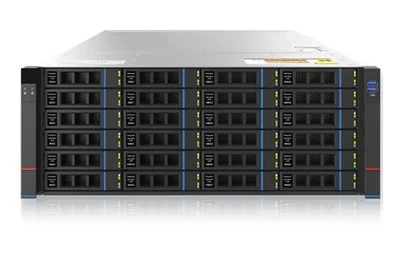
First off, let’s clear up the basics. A rack server isn’t some standalone box you stick under your desk—think of it as a long, slim computer built to slide right into a standard 19-inch rack, the metal frame you see in data centers or even your IT guy’s closet. These racks hold dozens, sometimes hundreds, of these servers stacked vertically, so every inch of space counts. That’s why they’re way more space-efficient than the old tower PCs you had in the 2000s. But how do they actually work, behind that metal front panel with the LED lights? Let’s start with the core parts, no textbook definitions here.
Every rack server’s got the same core components your home PC has, just amped up for non-stop work: a CPU (the brain), RAM (the short-term memory), storage (the long-term stuff—hard drives or SSDs), and a power supply, but with big twists. Let’s talk about the brain first. A home PC might have one or two cores to run your browser and Spotify, but a rack server’s got multiple CPUs, often with 16, 24, even 32 cores each. That’s not just for flexing—each core can handle a separate task, like crunching spreadsheets for your finance team, running a customer database, or hosting a virtual meeting for 50 people at once. No more “wait, this tab’s lagging” here—these CPUs are built to run 24/7 without taking a break.
Then there’s RAM, or random access memory. Think of this as the server’s scratchpad. When you load a spreadsheet or pull up a customer order, the server shoves that data into RAM so it can grab it instantly, instead of digging through slow storage. A home PC might have 16GB of RAM, but a rack server can have up to 64GB, 128GB, even more. And here’s the thing: RAM is volatile, meaning if power cuts out, that data disappears. That’s why storage comes next. Rack servers use two main types of storage: HDDs (hard disk drives, the spinning old-school ones) for big, cheap archives—like storing last year’s sales records—and SSDs (solid-state drives, no moving parts) for fast access, like your active customer data. A lot of our clients mix both, since cost and speed matter for every business.
But stacking all these servers in a rack wouldn’t work if they overheated. That’s where the rack’s cooling system comes in, and it’s way more intense than your desk fan. Most data center racks have a front-to-back airflow setup: cool air blows in from the front, hits each server’s fans, which suck that air through the CPUs and RAM, then push hot air out the back. Some of our newer servers even have smart fans that adjust speed based on how hard the CPUs are working—no wasted energy, no loud whirring when things are chill. And for super hot environments, we offer liquid cooling options, which basically circulate cold water through tiny tubes in the server. It’s more expensive, but perfect for clients running heavy tasks like AI training or video rendering.
Now, how do these servers talk to each other and the outside world? Networking is everything here. Every rack server has at least two Ethernet ports—one to connect to the local network (like your office Wi-Fi or data center’s internal network) and one for out-of-band management. Wait, out-of-band? That’s just tech speak for “remote access.” If a server crashes at 2 a.m., our clients don’t have to drive to the data center—they can log in from their phone, reboot the server, or check for errors without even touching the box. That’s a game-changer for small and big businesses alike.
But here’s where things get really cool: redundancy. A lot of businesses can’t afford downtime—if their e-commerce site goes down for an hour, they lose thousands in sales. So our rack servers are built with redundant parts, like dual power supplies. If one power unit fails, the other kicks in automatically, no blip in service. Some even have redundant network ports, so if one cable gets unplugged (or cut, in a worst-case scenario), the other takes over in seconds. We also help clients set up server clusters—multiple rack servers working together like one big brain. If one server’s busy, it shoves tasks to another, so nothing slows down. That’s how big companies keep their sites up even when traffic spikes during Black Friday.
Wait, let’s make this relatable. Let’s say you run a small marketing agency. You need to host your client’s website, store design files, and run a weekly meeting tool. Instead of buying 10 separate tower PCs, you stick 4 rack servers in one 19-inch rack. One server hosts the website, another stores your design files, another runs the meeting software, and the fourth is a backup in case one of the others fails. That’s way cheaper, takes less space, and is way more reliable than buying standalone boxes. That’s exactly what we help clients do every day.
Now, I know you’re probably thinking, “What about security?” Yeah, that’s a big one. Rack servers are targets for hackers, right? So we build in layers of security. First, there’s hardware-level encryption—we encrypt data on the storage drives so even if someone steals the drive, they can’t read the data. Then there’s software stuff like firewalls and access controls, but we work with our clients to tailor that to their needs. For example, a healthcare client needs HIPAA-compliant servers, so we build those with extra security locks and audit trails that track every change to the data. A startup might just need basic firewall setup, so we keep it simple and affordable.
Let’s talk about maintenance, too. A lot of new clients ask, “Do these servers break all the time?” Nope, not if you take basic care. We recommend running regular updates (we offer remote update services, so you don’t have to touch the server), checking for hard drive health monthly, and keeping the rack’s airflow clear of dust. But even with that, parts wear out. That’s why we offer support plans—if a CPU or fan goes bad, we ship a replacement within 24 hours, and our team can walk you through swapping it over the phone, or even send a tech to your location if you need it. We don’t just sell you a server and ghost you—we’re here for the long haul.
Wait, let’s address a common myth: rack servers are only for giant tech companies. No way. We work with small retail shops, law firms, schools, and even nonprofits. A local law firm might use a rack server to store client contracts and run their billing software. A school might use it to host student learning platforms and store test records. They’re scalable, too—if your business grows, you can just add another server to the rack, instead of buying a whole new system. That flexibility is why they’re so popular right now.
Let’s circle back to how they work, step by step, like a day in the life. 1. You send a customer an email—your laptop connects to the office network, which routes the request to a rack server in your office closet or local data center. 2. That server’s RAM pulls up your email data, sends it to the other server that’s running your email software, which verifies you’re the sender. 3. The server’s CPU processes the request, sends the email to your company’s email provider (which might be another rack server at a big data center), and the provider shoves a copy into your storage. 4. If the server gets too hot, the smart fans kick up speed, and the cooling system keeps it from overheating. 5. If a part fails, the redundant power supply takes over, no downtime for you. That’s every time you use work email, stream a company webinar, or even process an online order.
Now, I know I’ve thrown a lot out there, but the main takeaway is this: rack servers are super reliable, space-efficient, and built to run nonstop, which is why almost every business relies on them. But here’s the thing—no two businesses are the same. A startup needs a different setup than a hospital, and a retail store needs something different than a design agency. That’s why we don’t just sell a one-size-fits-all server. We sit down with you (virtually or in person, whatever works) to figure out what you need: how much storage, how many cores, redundancy, security features, even your budget. We’ve helped hundreds of clients pick the right rack servers, and we can help you too.
If you’re tired of your system lagging during peak times, worried about downtime costing you money, or just ready to upgrade from those clunky old towers, let’s chat. No sales pitches, no confusing jargon—just us figuring out what works for your business. We can walk you through options, answer all your weird questions, and get you set up with a server that grows as you do. Don’t wait until your current system crashes mid-quarter—reach out today to start a conversation about your rack server needs.
That’s it for today, folks. If you have questions, drop a comment below, and I’ll answer as many as I can. Thanks for hanging out.
Liquid-Cooled Servers References:
- "Understanding Rack Servers: Core Components and Functionality" – TechTarget, 2024
- "Data Center Cooling Systems for Rack Servers" – Uptime Institute, 2023
- "Redundancy in Server Infrastructure for Business Continuity" – Cisco Systems, 2024
- "HIPAA-Compliant Rack Servers: Security Requirements for Healthcare" – Health IT Security, 2023
Shenzhen TFNEW Technology Co., Ltd.
Shenzhen TFNEW Technology Co., Ltd. is is one of the most professional rack servers manufacturers and suppliers in China, also supports customized service. We warmly welcome you to wholesale bulk cheap rack servers from our factory. If you have any enquiry about cooperation, please feel free to email us.
Address: Room 408, Block F, Zhantao Commercial Plaza, No.376 Longhua Jianshe Road, Longping Community, Dalang Sub-district, Longhua District, Shenzhen City
E-mail: jack@tfnew.com
WebSite: https://www.tfictai.com/
