If you’re in the wastewater or sludge management industry, you know that mobile sludge dewatering centrifuges aren’t just another piece of equipment—they’re critical for reducing sludge volume, cutting disposal costs, and getting the job done fast, especially in remote, emergency, or short-term site locations. As a supplier who’s spent the last decade working directly with municipal crews, construction managers, and environmental services teams, I’ve seen firsthand how choosing the wrong mobile centrifuge brand can turn a smooth job into a costly nightmare. I’ve also seen how a great brand can streamline operations, save time, and even extend the life of your equipment. Today, I’m breaking down the practical, science-backed factors to compare brands, straight from the perspective of someone who sells these machines and uses them side-by-side with our customers. Mobile Sludge Dewatering Centrifuge
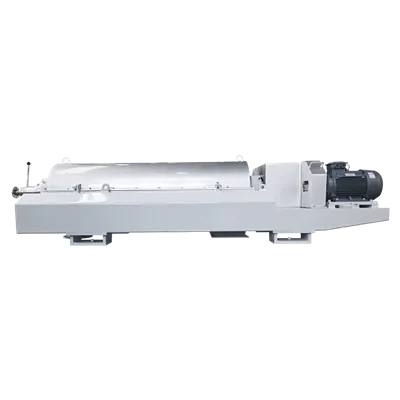
First, let’s get one thing out of the way: mobile sludge dewatering centrifuges aren’t all made equal. A lot of suppliers will boast about “high-performance” or “low cost,” but the real differences lie in how those claims hold up in real-world conditions. When comparing brands, start with the core of the machine: the decanter centrifuge itself, which is where the dewatering happens. This isn’t just a rotating drum—its design, materials, and precision engineering directly impact dry solids capture (DSC) and solids concentration, two metrics that define a centrifuge’s effectiveness.
Let’s talk about dry solids capture first, because it’s the single biggest indicator of a centrifuge’s ability to do its job. DSC measures how much of the dry solids in raw sludge the centrifuge pulls out of the liquid effluent. A brand that only captures 85% means 15% of your solids are going out with the effluent, which can violate environmental discharge permits, require extra treatment steps, or even lead to fines. The best brands typically advertise DSC rates of 92% or higher, but don’t just take their word for it. Ask for third-party test data—independent labs that run standardized sludge dewatering tests under conditions that match your site’s sludge type (municipal primary, secondary, industrial, etc.). I’ve seen brands fudge test numbers, but our team at [Our Company] shares full test reports with every potential customer because we know our machines perform. Also, check if the brand’s DSC holds up with variable sludge loads. Some centrifuges only hit high DSC when sludge flow and solids content are perfectly stable, but real sites rarely have that—you’ll get surges in raw sludge, so a reliable brand will maintain high capture even with fluctuating feed.
Next, solids concentration, which is how much dry solid content your dewatered sludge cake ends up with. The higher the solids, the less you have to dispose of—disposal costs are usually tied to weight, so a 5% cake vs. 10% cake cuts your disposal volume almost in half. For example, if you process 10,000 gallons of sludge with 1% solids, a centrifuge that produces 8% cake will yield 1000 pounds of dry solids, while one that produces 12% will yield almost 1500 pounds. That difference adds up fast on a project with 100,000 gallons of sludge. Again, compare brands on their cake solids rates under real operating conditions, not just lab tests. Some budget brands skimp on bowl design to cut costs, leading to thin, watery cake that’s expensive to move. Our mobile units, for instance, use a variable bowl conveyor speed that adjusts to sludge feed, so we consistently hit 10-14% cake solids, even with challenging industrial sludge.
Now, since this is a mobile machine, portability and durability are non-negotiable. A static centrifuge can be bolted down and serviced easily, but a mobile unit has to be driven to remote sites, set up quickly, and withstand rough terrain, rain, dust, and temperature swings. When comparing brands, ask about their mobile chassis design first. Look for brands that build their centrifuges on purpose-built trailers, not just a retrofitted trailer bolted to a static centrifuge. Retrofitted units often have alignment issues between the centrifuge and the feed/pump systems, leading to more breakdowns. Purpose-built trailers from reputable brands will have integrated pumps, control panels, and waste tanks to reduce setup time. A good mobile centrifuge should be set up in less than 2 hours, not half a day. I’ve had customers tell me about brands that require extra days to level and connect their machines, costing them overtime on labor.
Durability goes hand-in-hand with portability. Sludge is a corrosive mix of water, organic matter, and sometimes chemicals, so the centrifuge’s bowl should be made of material that resists wear and corrosion. High-chrome alloy is standard for top brands, but some cheaper brands use mild steel with a thin coating that wears off quickly. Ask about wear parts—when will the bowl need to be re-lined? A good brand will offer hard-surfacing or tungsten carbide coatings that extend bowl life to 5,000 operating hours or more. I’ve seen budget brands where the bowl wears out in under 2,000 hours, leading to thousands of dollars in replacement costs. Also, check how accessible service parts are. Top brands have local distribution centers for wear parts, so if a screw or conveyor belt breaks, you don’t have to wait a week for a part to be shipped across the country. Our team keeps a full inventory of spare parts at our regional warehouses, and we train our service techs to be on-site within 24 hours for emergency repairs.
Then there’s ease of operation and automation. Mobile sludge dewatering jobs are often staffed by small crews, sometimes just one or two people, so a centrifuge that’s complicated to run is a problem. Look for brands with user-friendly control panels—touchscreens with pre-set programs for different sludge types, so the crew doesn’t have to adjust dozens of settings manually. Automatic sludge feed and polymer dosing systems are a huge plus, because polymer mixing is one of the most error-prone parts of the process. If the polymer isn’t mixed correctly, you’ll get poor cake solids or high effluent solids. Top brands calibrate their dosing systems to match specific sludge, and some have sensors that adjust polymer flow in real time based on feed sludge content. I’ve worked with customers who switched from manual dosing to automated systems and reduced polymer costs by 20% just from more accurate dosing. That’s a big saving, since polymer can make up 15-20% of operating costs for these machines.
Wastewater compliance is another angle that’s easy to overlook, but can make or break a job. Mobile sites are often in areas with strict discharge limits for effluent (the water that comes out of the centrifuge after dewatering). If your effluent has high suspended solids or chemical contaminants, you could face fines or be shut down mid-job. When comparing brands, ask about effluent quality. Top centrifuges will have effluent that meets local discharge standards, sometimes even without additional treatment. Some brands will offer effluent recycling systems, where the treated water is reused for polymer mixing or site cleaning, which cuts down on water waste and discharge. That’s a huge benefit for sites in drought-prone areas or near water bodies with strict regulations. Our mobile units, for example, have effluent with less than 1,000 mg/L of suspended solids, which is well below most municipal and industrial limits.
Now, let’s talk about cost, because it’s a factor, but don’t make it the only factor. A lot of customers will pick the cheapest brand upfront, only to spend more on repairs, disposal, and downtime a year later. To compare brands fairly, calculate the total cost of ownership (TCO), not just the purchase price. TCO includes the initial cost, operating costs (polymer, electricity, fuel), maintenance, repairs, and disposal savings from better cake solids. For example, a budget brand that costs $50,000 might have 10% lower purchase price, but costs $15,000 a year in extra disposal fees because of thinner cake, plus $8,000 a year in maintenance and polymer costs. That’s $23,000 a year in extra costs, which adds up fast. A higher-quality brand that costs $65,000 might have $8,000 a year in disposal savings and $4,000 in lower maintenance, so the TCO over 5 years is actually $15,000 less than the budget brand. I always recommend asking brands for a TCO breakdown, or if they have case studies of similar-sized jobs so you can see the real costs.
Also, don’t sleep on the brand’s customer support and training. When you buy a mobile centrifuge, you’re not just buying a machine—you’re buying the support to keep it running. Top brands will offer on-site training for your crew, so they know how to operate the centrifuge, perform basic maintenance, and troubleshoot common issues. After-sales support should include 24/7 technical support, so if your machine breaks down at 2 a.m. on a job site, you can get someone on the phone immediately. I’ve heard horror stories about brands that sell a machine and then disappear, making customers wait weeks for support. Our team, for instance, does free on-site training for every customer, and we have a dedicated support line that’s open 7 days a week, so you’re never stuck with a broken machine on the job.
To wrap this up, comparing mobile sludge dewatering centrifuge brands isn’t about picking the one with the lowest price or the flashiest marketing. It’s about looking at hard, data-driven metrics: solids capture and concentration, mobile design and durability, ease of operation, compliance with discharge standards, and total cost of ownership. Every brand will have its strengths and weaknesses, so the key is to align the brand with your specific needs. If you’re doing emergency sludge removal for a city, you need a brand that’s fast to set up and easy to operate. If you’re processing industrial sludge with heavy metals, you need a brand with corrosion-resistant parts and high effluent quality.
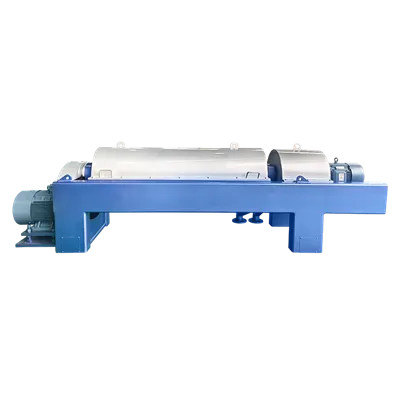
If you’re in the market for a mobile sludge dewatering centrifuge and want to compare our machines against other brands, I’d be happy to walk you through our test data, TCO breakdown, and customer case studies. We’ve worked with hundreds of teams across the country, and we’re confident our units deliver the performance, durability, and support you need for your jobs. You can reach out to our team to schedule a demo, ask questions, or get more details on how our mobile centrifuges can fit your project.
Decanter Centrifuge References:
- Water Environment Federation. (2021). Design and Operation of Sludge Dewatering Systems. WEF Press.
- American Society of Mechanical Engineers. (2019). Standard for Centrifugal Dewatering Equipment for Wastewater Sludge. ASME International.
- Sludge Management Association. (2022). Total Cost of Ownership Benchmark for Dewatering Equipment. SMA Annual Report.
- National Pollution Discharge Elimination System. (2020). Effluent Limitations Guidelines for Sludge Treatment Facilities. EPA.
- International Water Association. (2021). Mobile Sludge Treatment: Best Practices for Remote Site Operations. IWA Publishing.
Lishui Yuanrong Environmental Protection Equipment Co., Ltd.
As one of the most professional mobile sludge dewatering centrifuge manufacturers and suppliers in China, we have world-leading production equipment and strong manufacturing capabilities. Please feel free to buy customized mobile sludge dewatering centrifuge from our factory. Also, quotation is available.
Address: Lot 6-1, Block 15, Wanyang Zongchuang City, Lishui, Zhejiang, China
E-mail: 361184920@qq.com
WebSite: https://www.yrhdc.com/
