Hey there! As a supplier of 3-wheel electric cars, I often get asked this question: “Do 3-wheel electric cars require a lot of electricity to charge?” Well, let’s dig into this topic and clear things up. 3-Wheel Electric Car

First off, let’s understand the basic components of a 3 – wheel electric car. These vehicles are powered by electric motors, and the energy to run these motors comes from rechargeable batteries. Most of the 3 – wheel electric cars we supply use lithium – ion batteries. They’re popular because they have a high energy density, meaning they can store a lot of energy in a relatively small space.
Now, when it comes to how much electricity these cars need to charge, it depends on a few factors. One of the most important factors is the battery capacity. The capacity is usually measured in kilowatt – hours (kWh). Just like the bigger the gas tank in a gasoline car, the more gas it can hold, a higher – capacity battery can store more electricity.
Our 3 – wheel electric cars typically come with battery capacities ranging from 5 kWh to 15 kWh. If we take an example of a car with a 10 kWh battery, and assuming a charging efficiency of around 90% (some energy is lost during the charging process), to fully charge this battery from empty, we’d actually be drawing a bit more than 10 kWh from the power grid, say around 11.1 kWh.
But, you might be thinking, “Is that a lot of electricity?” Well, let’s compare it to some common household appliances. A typical home refrigerator uses about 1 – 2 kWh per day. So, charging a 10 kWh 3 – wheel electric car battery is like running your fridge for 5 – 11 days. And more importantly, you don’t charge your car every single time the battery is completely empty. On an average daily commute, you might only use 2 – 4 kWh of battery power, which is a relatively small amount of electricity.
Another factor that affects the electricity consumption during charging is the charging speed. There are different types of charging methods for our 3 – wheel electric cars. The slowest one is the standard household outlet charging. This is like a trickle – charge. It usually uses a 120 – volt outlet and can take anywhere from 6 to 12 hours to fully charge the battery. The advantage of this method is that it doesn’t draw a large amount of power at once. For example, it might draw only around 1 – 2 kilowatts of power during the charging process.
On the other hand, we also offer fast – charging options for our customers. These fast – chargers can charge a battery to 80% in as little as 30 minutes to an hour. But they draw a much higher amount of power, usually around 20 – 50 kilowatts. However, fast – charging is not something you do every day. It’s more for when you’re in a hurry and need to get back on the road quickly.
The driving style of the user also impacts how much electricity is needed for charging. Aggressive driving, with lots of rapid acceleration and hard braking, can drain the battery faster than a more gentle driving style. When you accelerate hard, the electric motor has to work harder, consuming more energy from the battery. And every time you brake, instead of effectively regenerating some energy through regenerative braking systems (which most of our 3 – wheel electric cars are equipped with), excessive braking can waste that potential energy recovery.
The terrain on which you drive your 3 – wheel electric car matters too. Driving on hilly areas means the car has to work harder to climb the slopes, thus using more battery power. In contrast, driving on flat, smooth roads is more energy – efficient.
Now, let’s talk about the cost of charging these 3 – wheel electric cars. The cost of electricity varies from region to region. In the United States, the average cost of electricity is around 13 cents per kWh. So, if you have a 10 kWh battery and it takes 11.1 kWh to fully charge it from empty, it would cost you about $1.44. Compare this to the cost of filling up a small gasoline – powered car, which can be upwards of $20 – $30.
In addition to being more cost – effective, 3 – wheel electric cars are also more environmentally friendly. Since they run on electricity, they produce zero tailpipe emissions. And as the grid becomes more and more powered by renewable energy sources like solar and wind, the carbon footprint of charging these cars will become even smaller.
So, to answer the question “Do 3 – wheel electric cars require a lot of electricity to charge?”, the answer is no. With the right charging methods and driving habits, the electricity consumption of these cars is quite manageable. And considering the long – term savings on fuel costs and the positive impact on the environment, they are a great option for urban commuting and short – distance travel.
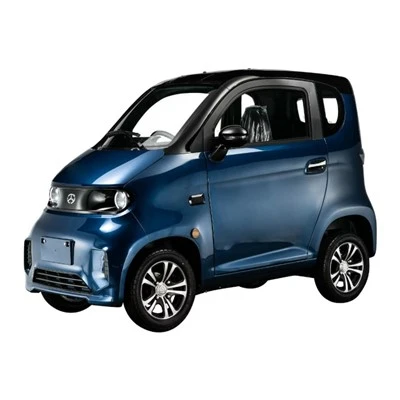
If you’re interested in our 3 – wheel electric cars, whether you’re an individual looking for a convenient way to get around town or a business interested in a fleet purchase, we’d love to talk to you. Feel free to reach out for more information or to start a purchase negotiation. Let’s make your transportation more efficient, cost – effective, and eco – friendly.
Electric Delivery Tricycle References
- “Electric Vehicle Batteries: Understanding the Basics” by Energy.gov
- “Driving Efficiency and Energy Consumption in Electric Vehicles” – Journal of Automotive Engineering
Taizhou Xiangyuan New Energy Technology Co., Ltd.
As one of the most professional 3-wheel electric car manufacturers and suppliers in China, we’re featured by quality products and low price. Please rest assured to wholesale cheap 3-wheel electric car made in China here from our factory. Contact us for customized service and pricelist.
Address: NO.7HUANGJIN ROAD,METAL RESOURCES RECYCLING INDUSTRY BASE, LUQIAO, TAIZHOU, ZHEJIANG
E-mail: order@jiajiev.com
WebSite: https://www.jiaji-ev.com/
