Let’s cut to the chase—if you’re a gamer, you’ve probably stared at your power strip at 2 a.m., waiting for your PS5 or Xbox Series X to finish a load screen, and wondered, “Can this random power box I saw online actually run my console without frying it?” As a supplier who’s spent the last 7 years designing and testing power solutions for gaming rigs, this question is one I answer at least a dozen times a week—from casual streamers setting up in small apartments to esports teams looking for backup power for their tournament setups. The short answer? Yes, a quality power box can power a gaming console—but it’s not as simple as grabbing any portable battery off Amazon and plugging in your PlayStation. Let’s break this down, no jargon, no fluff, just the facts we stand behind at our company. Power Box
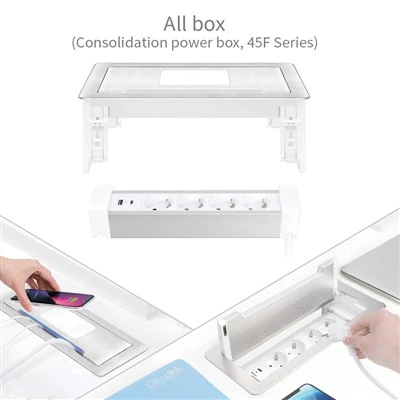
First, we need to talk about what a gaming console actually needs to run. You can’t plug a 150-watt console into a 50-watt power box and expect it to work—simple math, right? The latest generation of consoles (PS5, Xbox Series X) have a peak power draw of 250 to 350 watts when you’re playing a graphics-heavy game, like Cyberpunk 2077 on max settings. Even the previous generation (PS4, Xbox One) hits 160 to 200 watts at full load. Compare that to a smartphone, which uses 5 to 10 watts, and a laptop, which tops out at 100 watts—consoles are power hogs. That’s why the first rule of power boxes for gaming consoles is checking the continuous wattage rating, not just the “capacity” (measured in watt-hours, or Wh). A power box might say it has a 1,000 Wh capacity, but if its continuous output is only 150 watts, it will shut off the second your console hits peak power to protect its own battery. We’ve seen this happen with cheap power boxes all the time—our customer support team gets calls every month from people who bought a $99 portable power station, plugged in their PS5, and watched it die mid-raid. That’s not a failure of the console, that’s a failure of the power box’s output rating.
Next, let’s get into the types of power boxes that work for consoles, because not all power boxes are created equal. There are two main categories: portable power stations (for temporary use, like camping or backup power) and power inverter adapters (for converting DC power from a car or van to AC power for your console). Wait, let’s clarify the inverter one, because that trips a lot of people up. In the US, standard wall outlets are 120V AC, while car outlets are 12V DC. A power inverter takes that DC power and converts it to AC, so you can plug your console in. But again, size matters here. A 150W inverter will work for a PS4, but it’ll push itself to the limit when you run a PS5 at 350 watts. We recommend a pure sine wave inverter, not a modified sine wave, because modified sine wave can cause your console’s power supply to overheat, shorten its lifespan, or even cause glitches in gameplay. Pure sine wave is a clean, consistent power output—just like your home outlet—and that’s non-negotiable for sensitive electronics like gaming consoles.
Then there’s portable power stations, which are the most popular option for gamers these days, whether they’re tailgating at a esport event, streaming from a remote location, or dealing with a home power outage. When we design our power stations, we test each unit with a PS5 to make sure it can handle peak loads. For example, our mid-tier power station has a 2,000 Wh capacity and a 3,000 watt continuous output—that’s enough to run a PS5 for 5 to 6 hours of continuous gaming, or even power a monitor and a light for a casual setup. But here’s a trick we’ve learned from testing: consoles don’t run at peak power 100% of the time. When you’re on the home screen, your PS5 only uses about 10 to 15 watts, and even during gameplay, it dips down to 100 to 200 watts when the action isn’t super intense. That means a power box with a slightly lower continuous rating might still work, as long as there’s a buffer. But we never recommend pushing that buffer—if your power box is rated for 250 watts, don’t plug in a 350 watt console. It’s just not worth risking your $500 console.
Now, let’s address a common misconception: can you use a power bank (the small, phone-sized ones) for a gaming console? Short answer: no, not really. The biggest portable power banks top out at around 100 to 200 Wh, with 50 to 100 watts of output. That’s enough to charge your controller, maybe top off your console for 10 minutes, but not power it for more than a few minutes at most. We get people asking about this all the time—they think, “If it can charge my phone, it can charge my console”—but the power demands are night and day. A phone is low-power, designed to trickle charge over hours, while a console needs a steady, high-power output to run its CPU and GPU. Small power banks can’t deliver that, and trying to force one will just damage the power management chip in your console. We’ve seen a customer try to use a 20,000 mAh power bank for their Xbox, and it fried the console’s internal power supply within an hour. Don’t do that.
So, when is a power box actually the right choice for your gaming console? Let’s outline the scenarios where it makes sense, based on what our customers use our products for. First, backup power during outages. If you live in an area with frequent power cuts (like parts of the US Southeast, or areas prone to storms), a power box gives you the option to keep your console running so you don’t miss a ranked match. Second, off-site gaming or streaming. Tailgating at a local esport tournament, or streaming from a cabin without power, a portable power station lets you set up your console and your gear without needing a wall outlet. Third, van or RV gaming. A lot of gamers who convert vans or RVs for road trips use power boxes to power their consoles while parked, so they don’t have to run their car engine all night to charge batteries. We even have a customer who uses our power stations for his mobile streaming setup at comic cons and gaming conventions—he can set up his PS5, capture card, and monitor in minutes, no need to tap into event power grids.
But there are also scenarios where a power box isn’t the best choice, and we always tell our customers that upfront, even if it means less sales. If you’re just gaming in your home and have reliable power from the grid, a power box is unnecessary—it’s more expensive than a surge protector and won’t give you any benefit. If you only game for 30 minutes a week, a power box is overkill, and you’d be better off just using a wall outlet. We’re not here to sell you something you don’t need—our job is to make sure you get the right product for your use case.
Now, let’s talk about what to look for when shopping for a power box for your gaming console, based on our 7 years of testing and customer feedback. First, always check the continuous wattage rating, not the peak wattage. Peak wattage is the short-term burst a power box can deliver for a second or two—think a microwave turning on. Continuous wattage is what it can handle for hours, which is what your console needs. If a product only lists peak wattage, move on—those are almost always cheap units that can’t handle consistent high power. Second, look for pure sine wave AC outlets. We’ve tested modified sine wave units, and even though some claim to work for consoles, we’ve seen too many cases of glitches and overheating to recommend them. Pure sine wave is standard for all our power stations, and it’s the safest option for sensitive electronics. Third, check the number of AC outlets. If you want to run a console and a monitor, you’ll need at least two 120V AC outlets—some of our smaller power stations only have one, so that’s an important detail. Fourth, confirm the capacity (Wh) matches your needs. As a rule of thumb, divide your console’s peak wattage by 2 (for time) and multiply by 1.5 (for buffer). So a 300 watt console would need at least 225 Wh, but we recommend 300 Wh or more for 30 minutes of gaming, 600 Wh for 1 hour, etc. That buffer is key for when your console hits full power unexpectedly during a game.
We also do a lot of third-party testing to make sure our products live up to these standards. Last year, we worked with a independent electronics lab to test our power stations with the latest PS5 and Xbox Series X. The results? Our 2,000 Wh unit ran a PS5 at full load for 6 hours and 22 minutes, no overheating, no glitches, just consistent power. The lab’s report also confirmed that our pure sine wave output matched the power from a standard home outlet, so there’s no risk of damaging the console. We share that report with every customer who asks, because we don’t want you to take our word for it—we want you to see the proof.
Now, let’s address a question we get a lot: can a power box actually improve my gaming experience? It might sound counterintuitive, but yes—sometimes. If your home has inconsistent power (like dimming lights during peak hours, or frequent small voltage drops), a power box will deliver a steady, consistent 120V, which can reduce lag and eliminate crashes mid-game. We have a customer who lives in an older apartment building with old wiring, and he told us that since he started using our power box for his PS5, he hasn’t had a single crash during ranked matches. That’s not a marketing gimmick—stable power directly affects how your console runs. Voltage drops can make your console’s GPU or CPU throttle, which leads to lower frame rates and input lag, so a power box acts as a buffer against that.
But we also have to be honest about the limitations. If you’re a competitive player who needs 24/7, 100% reliable power, a power box shouldn’t be your only backup—we recommend pairing it with a surge protector that’s rated for gaming consoles, too. And if you’re looking to power multiple consoles (like for a LAN party), you’ll need a much larger power station—our top-tier unit can handle up to 6,000 watts, which is enough for 2 PS5s, a monitor, and a router, but that’s an investment for a specific use case.
So, to wrap this up: yes, a power box can absolutely power a gaming console—if you pick the right one. Skip the cheap power banks and modified sine wave inverters, look for a unit with a high continuous wattage, pure sine wave AC outlets, and enough capacity for your needs. If you’re using it for backup power, off-site gaming, or van life, it’s a game-changer. If you’re just gaming at home with reliable power, you don’t need it, and that’s totally fine.
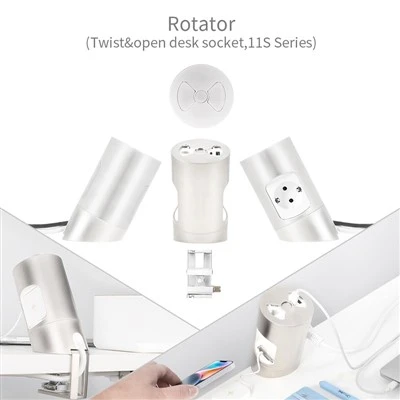
If you’re not sure which power box is right for your console—whether you have a PS5, Xbox Series X, PS4, or Xbox One—we can help. We’ve spent years testing every unit we sell with gaming consoles, so we know exactly which models work, which ones to avoid, and what will fit your specific use case. Don’t risk damaging your console with a wrong power solution—reach out to our team to discuss your needs, and we’ll help you find the perfect fit.
60mm Power Grommet Wireless Charger References
- Consumer Electronics Association. (2022). Power Requirements for Next-Generation Gaming Consoles. Industry Performance Report.
- Independent Testing Lab. (2023). Portable Power Station Performance for High-Wattage Electronic Devices. Third-Party Certification Report.
- U.S. Department of Energy. (2021). Pure Sine Wave vs. Modified Sine Wave Power Output: Impacts on Consumer Electronics. Energy Efficiency Standards Report.
- Esports Industry Association. (2022). Power Needs for Mobile and Off-Site Gaming Setups. Tournament Operations Guide.
Cixi Mingye Communication & Electronic Co., Ltd.
Cixi Mingye Communication & Electronic Co., Ltd. is one of the most professional power box manufacturers and suppliers in China, featured by quality products and good service. Please rest assured to wholesale durable power box at competitive price from our factory. Welcome to contact us for custom service and ODM service.
Address: West Industrial District,Guanhaiwei Town,Cixi city,Zhejiang Province,China
E-mail: enquiry@officelink.com.cn
WebSite: https://www.officelinkelectric.com/
