In the dynamic world of printing technology, the capabilities of flatbed printers have continuously expanded, catering to a wide range of materials and applications. As a leading supplier of flatbed printers, I often encounter inquiries about the printer’s versatility, especially regarding its ability to print on unconventional materials. One such frequently asked question is, "Can a flatbed printer print on wool?" In this blog post, I will delve into this topic, exploring the technical aspects, challenges, and potential solutions for printing on wool using a flatbed printer. Flatbed Printer
Understanding Flatbed Printers
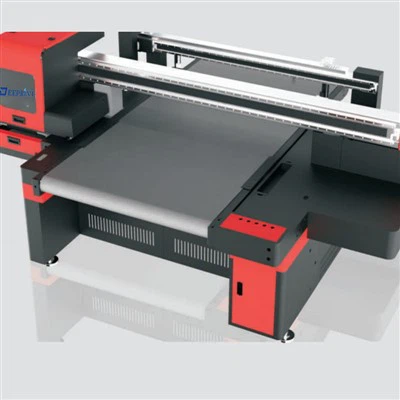
Before we discuss the possibility of printing on wool, it’s essential to understand the basic principles of flatbed printers. Unlike traditional roll-to-roll printers, flatbed printers are designed to print directly on a flat surface. They use a variety of printing technologies, such as inkjet, laser, or UV curable, to apply ink onto the substrate. The flatbed design allows for printing on a wide range of materials, including wood, glass, metal, plastic, and fabrics.
One of the key advantages of flatbed printers is their ability to print high-resolution images with excellent detail and color accuracy. They can also print on irregular or textured surfaces, making them suitable for a variety of applications, from promotional items to industrial signage. Additionally, flatbed printers offer the flexibility to print on small or large batches, making them a cost-effective solution for businesses of all sizes.
Wool as a Printing Substrate
Wool is a natural fiber that is derived from the fleece of sheep or other animals. It is known for its softness, warmth, and durability, making it a popular choice for clothing, home decor, and other textile products. However, wool also presents several challenges when it comes to printing.
One of the main challenges is the porosity of the wool fibers. Wool is a highly porous material, which means that it can absorb ink quickly and unevenly. This can result in poor image quality, with smudging, bleeding, and color dullness. Additionally, the natural oils and lanolin in wool can interfere with the adhesion of the ink, causing it to peel or flake off over time.
Another challenge is the texture of the wool. Wool fibers are often curly or wavy, which can create a rough and uneven surface. This can make it difficult for the printer to apply the ink evenly, resulting in a patchy or inconsistent print. Additionally, the texture of the wool can cause the ink to dry more slowly, increasing the risk of smudging and damage during the printing process.
Printing on Wool with a Flatbed Printer
Despite these challenges, it is possible to print on wool using a flatbed printer. However, it requires careful preparation, the right equipment, and the appropriate printing techniques. Here are some steps to follow when printing on wool with a flatbed printer:
Step 1: Prepare the Wool
Before printing on wool, it is important to prepare the material properly. This includes cleaning the wool to remove any dirt, oil, or debris that may interfere with the adhesion of the ink. You can use a mild detergent and water to clean the wool, or you can use a specialized fabric cleaner. After cleaning, rinse the wool thoroughly and allow it to dry completely.
In addition to cleaning, you may also need to pre-treat the wool to improve the adhesion of the ink. There are several pre-treatment products available on the market that are specifically designed for printing on fabrics. These products can be applied to the wool using a spray bottle or a roller, and they help to create a smooth and even surface for the ink to adhere to.
Step 2: Choose the Right Ink
The type of ink you use is crucial when printing on wool. You need to choose an ink that is specifically designed for printing on fabrics and that is compatible with your flatbed printer. There are several types of inks available, including water-based, solvent-based, and UV curable inks.
Water-based inks are a popular choice for printing on wool because they are environmentally friendly and produce vibrant colors. However, they may not be as durable as solvent-based or UV curable inks, and they may require a heat treatment to set the ink.
Solvent-based inks are more durable than water-based inks and are suitable for printing on a variety of materials, including wool. However, they contain volatile organic compounds (VOCs), which can be harmful to the environment and human health. Therefore, it is important to use solvent-based inks in a well-ventilated area and to follow all safety precautions.
UV curable inks are a relatively new type of ink that is becoming increasingly popular for printing on fabrics. They are cured using ultraviolet light, which makes them dry instantly and produces a durable and long-lasting print. UV curable inks are also environmentally friendly and do not contain VOCs. However, they require a specialized UV curing system, which can be expensive.
Step 3: Adjust the Printer Settings
Once you have prepared the wool and chosen the right ink, you need to adjust the printer settings to ensure that the print quality is optimal. This includes setting the print resolution, the ink density, and the print speed.
The print resolution refers to the number of dots per inch (dpi) that the printer can produce. A higher resolution will result in a more detailed and sharper print, but it may also take longer to print. For printing on wool, a resolution of 360 dpi to 720 dpi is usually sufficient.
The ink density refers to the amount of ink that is applied to the substrate. A higher ink density will result in a more vibrant and saturated color, but it may also increase the risk of smudging and bleeding. For printing on wool, it is recommended to start with a lower ink density and gradually increase it until you achieve the desired color intensity.
The print speed refers to the speed at which the printer moves the print head across the substrate. A higher print speed will result in a faster print, but it may also reduce the print quality. For printing on wool, it is recommended to use a slower print speed to ensure that the ink is applied evenly and that the print quality is optimal.
Step 4: Print the Design
Once you have adjusted the printer settings, you are ready to print the design. Place the wool on the flatbed printer and align it with the print head. Make sure that the wool is flat and smooth, and that there are no wrinkles or folds.
Before printing the entire design, it is recommended to print a test print on a small piece of wool to check the print quality and to make any necessary adjustments to the printer settings. Once you are satisfied with the test print, you can proceed to print the entire design.
Step 5: Cure the Ink
After printing the design, you need to cure the ink to ensure that it is durable and long-lasting. The curing process depends on the type of ink you used. If you used water-based ink, you may need to heat the wool to set the ink. You can do this by using a heat press or a dryer.
If you used solvent-based or UV curable ink, you will need to use a specialized curing system to cure the ink. Solvent-based inks require a ventilation system to remove the VOCs, while UV curable inks require a UV curing lamp to cure the ink.
Challenges and Solutions
While it is possible to print on wool using a flatbed printer, there are several challenges that you may encounter. Here are some of the common challenges and solutions:
Challenge 1: Ink Absorption
As mentioned earlier, wool is a highly porous material, which means that it can absorb ink quickly and unevenly. This can result in poor image quality, with smudging, bleeding, and color dullness.
Solution: To overcome this challenge, you can pre-treat the wool with a fabric primer or a sizing agent. These products help to create a smooth and even surface for the ink to adhere to, reducing the absorption of the ink. Additionally, you can use a lower ink density and a slower print speed to ensure that the ink is applied evenly.
Challenge 2: Ink Adhesion
The natural oils and lanolin in wool can interfere with the adhesion of the ink, causing it to peel or flake off over time.
Solution: To improve the adhesion of the ink, you can pre-treat the wool with a fabric adhesive or a bonding agent. These products help to create a strong bond between the ink and the wool, ensuring that the print is durable and long-lasting. Additionally, you can use a heat treatment to cure the ink, which helps to further strengthen the bond between the ink and the wool.
Challenge 3: Texture and Surface Irregularities
The texture of the wool can create a rough and uneven surface, which can make it difficult for the printer to apply the ink evenly.
Solution: To overcome this challenge, you can use a flatbed printer with a high-resolution print head and a variable dot technology. These features allow the printer to adjust the size and shape of the ink droplets, ensuring that the ink is applied evenly to the surface of the wool. Additionally, you can use a heat press or a roller to flatten the wool and to remove any wrinkles or folds before printing.
Conclusion

In conclusion, it is possible to print on wool using a flatbed printer, but it requires careful preparation, the right equipment, and the appropriate printing techniques. By following the steps outlined in this blog post and by addressing the challenges and solutions discussed, you can achieve high-quality prints on wool that are durable and long-lasting.
Cylindrical UV Printer As a supplier of flatbed printers, I am committed to providing my customers with the best possible printing solutions. If you are interested in printing on wool or any other materials, I encourage you to contact me to discuss your specific requirements and to learn more about our products and services. I look forward to hearing from you and to helping you achieve your printing goals.
References
- "Textile Printing: Principles and Practices" by R. M. Christie
- "Inkjet Printing Technology: Principles and Applications" by H. K. Kaufman and J. P. Heck
- "Flatbed Printers: A Comprehensive Guide" by John Smith
Shenzhen Deeprint Technology Co., Ltd.
As one of the most professional flatbed printer manufacturers and suppliers in China, we’re featured by quality products and good service. Please rest assured to buy customized flatbed printer made in China here from our factory. Contact us for free sample.
Address: 6-1, Huangwu Road, Tongle Community, Baolong Street, Longgang District, Shenzhen City 518100,China.
E-mail: ellen@uvdprint.com
WebSite: https://www.uvd-print.com/
